
Introduction
Choosing the Best Crypto Trading Bots requires more than comparing advertised automation features, subscription prices, or historical performance charts.
Cryptocurrency markets operate continuously, but automated trading software cannot eliminate volatility, guarantee profitable transactions, or prevent losses caused by unsuitable strategies.
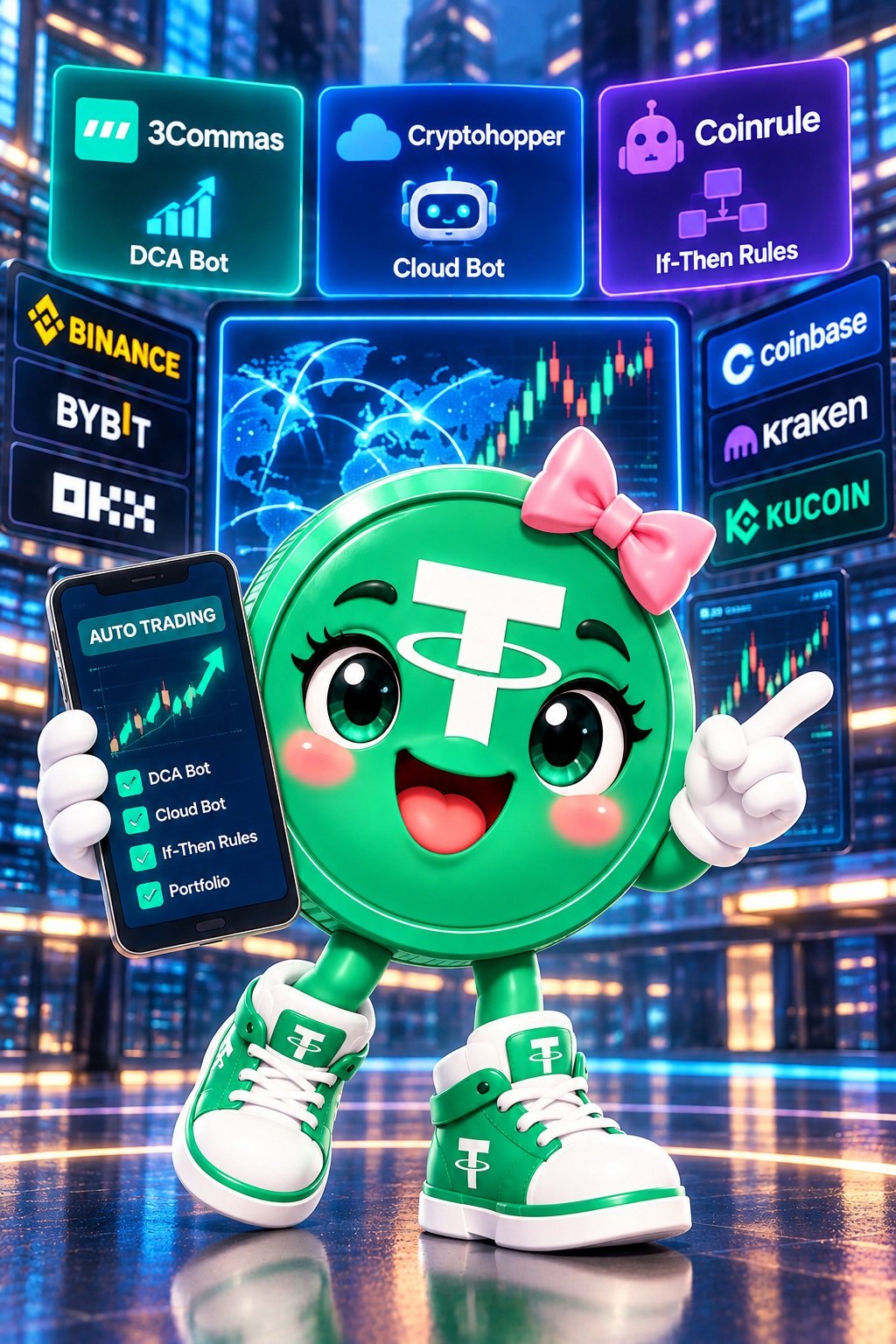
Three platforms frequently evaluated by cryptocurrency traders are 3Commas, Cryptohopper, and Coinrule. Although all three provide trading automation, their strategy-building tools, account management features, and operational approaches differ.
3Commas emphasizes configurable DCA Bots, Grid Bots, Signal Bots, and trading Terminal functionality. Cryptohopper provides cloud-hosted automation, Strategy Designer, Marketplace resources, and testing tools. Coinrule focuses on visual rule-based automation that allows users to create conditional trading instructions without conventional programming.
This CryptoWikiHub comparison examines their main features, supported trading approaches, exchange connectivity, subscription considerations, security requirements, and practical limitations.
The objective is to help readers understand which platform may be relevant to their operational needs rather than declare a universally superior trading bot.
Important risk notice: Automated cryptocurrency trading involves substantial financial risk. Trading bots can repeatedly execute unsuitable strategies, accumulate losses, or encounter exchange API failures, market liquidity problems, and unexpected technical interruptions.
Editorial disclosure: This article is an independent educational comparison. CryptoWikiHub has not independently verified live trading profitability, conducted controlled performance benchmarks, or audited the infrastructure of the three platforms.
Commercial disclosure: CryptoWikiHub may receive commissions from qualifying subscriptions through clearly disclosed affiliate links if commercial partnerships are established. No exclusive discount, guaranteed promotional benefit, or verified affiliate tracking relationship is claimed in this article.

What Is a Crypto Trading Bot?
A crypto trading bot is software that follows predefined instructions to monitor cryptocurrency markets and perform supported trading actions.
Instead of manually reviewing every price movement, users configure conditions that the software evaluates automatically.
For example, a rule-based system might be configured to submit an order when a selected technical indicator reaches a specified value.
Whether that order executes successfully depends on the exchange, available funds, market conditions, order type, and system connectivity.
How Automated Cryptocurrency Trading Works
A typical exchange-connected trading bot involves several components:
- Trading strategy: Defines the conditions that may trigger trading actions.
- Market data: Provides prices, trading pairs, and other relevant information.
- Bot engine: Evaluates whether configured conditions are satisfied.
- Exchange connection: Communicates with a supported exchange through an authorized integration.
- Order execution: Submits trading instructions according to available permissions.
- Monitoring: Records supported activity, errors, and execution results.
The bot does not necessarily hold the user’s cryptocurrency. Many exchange-connected services submit orders to an external exchange where the account and assets remain.
However, connecting third-party software introduces additional security and operational considerations.
For background on exchange infrastructure, read our How Cryptocurrency Exchanges Work guide.
Trading Bots vs Manual Trading
| Factor | Manual Trading | Automated Trading |
|---|---|---|
| Order decisions | Human decisions | Configured strategy conditions |
| Market monitoring | Requires user attention | Can operate automatically |
| Execution consistency | Depends on human behavior | Follows configured instructions |
| Strategy errors | Human judgment errors | Configuration and logic errors |
| Technical dependencies | Trading application and exchange | Bot infrastructure, APIs, and exchange |
| Additional costs | Exchange-related costs | Possible subscription and exchange costs |
| Profit guarantee | None | None |
Automation may improve consistency in executing predefined instructions, but consistent execution of a losing strategy can also produce repeated financial losses.
Are Crypto Trading Bots Artificial Intelligence?
Not every cryptocurrency trading bot uses artificial intelligence.
Some bots rely on price conditions, technical indicators, or predefined mathematical rules. Others may incorporate AI-assisted strategy creation, machine learning, or additional analytical tools.
AI-related marketing terminology does not establish that software can accurately predict cryptocurrency prices or outperform financial markets.
Users should distinguish ordinary rule execution from genuinely AI-assisted functionality.
Can Trading Bots Operate 24 Hours a Day?
Many automated trading platforms are designed to monitor supported cryptocurrency markets continuously without requiring users to remain logged into a personal computer.
However, actual operation depends on provider availability, exchange connectivity, account permissions, subscription conditions, and configuration.
Continuous monitoring does not guarantee uninterrupted order execution or profitable trading.
Why Do Cryptocurrency Traders Use Automated Bots?
Cryptocurrency markets operate across global time zones, creating situations where prices may change while individuals are sleeping, working, or away from their trading screens.
Automation allows predefined instructions to be evaluated without requiring constant manual interaction.
Consistent Rule Execution
A properly configured bot can follow the same trading conditions repeatedly without making discretionary decisions based on momentary emotions.
However, consistent execution does not determine whether the underlying strategy is financially appropriate.
Monitoring Multiple Trading Pairs
Some platforms allow users to monitor several supported cryptocurrency pairs through one interface.
This can reduce repetitive manual work, but managing multiple markets also increases configuration complexity and potential financial exposure.
Scheduled and Conditional Trading
Automation may support recurring purchases, technical indicator triggers, or other predefined trading actions.
Users must still evaluate transaction costs, available balances, and the risks associated with each instruction.
Reducing Repetitive Manual Tasks
Trading bots may automate selected tasks such as submitting configured orders, monitoring positions, or recording trading activity.
Automation does not eliminate the need for supervision. Users should regularly review account activity, error notifications, strategy settings, and unexpected market conditions.
3Commas vs Cryptohopper vs Coinrule: Quick Comparison
The three platforms approach cryptocurrency trading automation through different combinations of tools.
The following overview identifies their primary characteristics without making claims about guaranteed performance.
| Platform | Main Focus | Notable Tools |
|---|---|---|
| 3Commas | Configurable trading automation | DCA Bots, Grid Bots, Signal Bots, Terminal |
| Cryptohopper | Cloud-hosted strategy management | Strategy Designer, Marketplace, Backtesting |
| Coinrule | Visual rule-based automation | If-Then rules, strategy templates |
These categories describe notable product capabilities rather than exclusive features. Some tools overlap, and availability may depend on subscription plans or supported integrations.
3Commas: Configurable DCA and Order Management
3Commas provides trading automation tools for supported cryptocurrency exchange connections.
Its DCA Bot functionality allows users to define averaging conditions, additional order parameters, and exit controls.
Grid Bots, Signal Bots, and Terminal functions support other trading workflows.
These tools may be relevant to users who want detailed configuration options, but increased flexibility also requires careful understanding of capital exposure and execution risks.
Detailed 3Commas guide: Explore DCA configuration, API security, Grid Bots, Signal Bots, Terminal functionality, and subscription considerations in our 3Commas Crypto Trading Bot: DCA Bots, SmartTrade & Setup Guide.
Cryptohopper: Cloud-Based Strategy Automation
Cryptohopper provides cloud-hosted automation designed to operate through supported exchange integrations.
Its tools include Strategy Designer, Marketplace resources, historical backtesting, and Paper Trading.
Cloud hosting can reduce dependence on keeping a personal computer continuously powered on, but the platform remains dependent on provider infrastructure and exchange availability.
Detailed Cryptohopper guide: Learn about cloud operation, Hopper configuration, strategy tools, testing, exchange security, and subscription costs in our Cryptohopper Trading Bot: Cloud Automation & Setup Guide.
Coinrule: Visual If-Then Trading Rules
Coinrule emphasizes visual automation through conditional trading instructions.
Its no-code approach allows users to define market conditions and corresponding actions without writing conventional programming code.
However, a simple interface does not remove the need to understand trading orders, account balances, risk limits, and repeated execution.
Detailed Coinrule guide: Explore visual If-Then trading rules, no-code strategy templates, exchange connections, subscription considerations, and operational risks in our Coinrule Trading Bot: No-Code Rules, Templates & Setup Guide.
How to Compare Crypto Trading Bots Before Subscribing
Choosing automated trading software should begin with the user’s operational requirements rather than the number of advertised features.
Different trading approaches require different levels of configuration, technical knowledge, account access, and ongoing supervision.
Strategy Configuration
Determine whether the platform supports the type of trading conditions the user intends to evaluate.
A DCA-oriented strategy requires different controls from a visual conditional trading system or an indicator-based strategy.
Users should understand the relevant parameters before enabling automated execution.
Exchange Compatibility
Verify that the selected platform currently supports the intended exchange, trading products, and account type.
Compatibility may differ between spot trading, margin trading, and derivatives.
General integration with an exchange does not guarantee support for every product or jurisdiction.
For exchange selection considerations, consult our How to Choose a Crypto Exchange guide.
Testing and Simulation
Review whether the platform provides supported backtesting, Paper Trading, or other simulation functionality.
Historical testing can help identify strategy behavior under selected conditions, but it cannot guarantee future profitability.
Simulation results may also depend on assumptions about liquidity, transaction fees, slippage, and order execution.
Security and API Permissions
Evaluate how the platform connects to cryptocurrency exchanges and which account permissions are required.
Where supported, grant only necessary API permissions and avoid enabling withdrawal access for ordinary trading automation.
For additional protection guidance, read How to Secure a Crypto Exchange Account.
Subscription and Trading Costs
Trading bot subscriptions may involve recurring charges, optional premium tools, and separate marketplace purchases.
Exchange trading fees, funding payments for derivatives, and other transaction-related expenses may apply independently of the software subscription.
Users should evaluate total operating costs rather than relying exclusively on an advertised monthly price.
Monitoring and Support
Before activating a strategy, review the available activity logs, alerts, error reporting, documentation, and support channels.
Users should understand how to pause automation, disconnect an exchange integration, and respond to unexpected orders or technical failures.
The following sections examine the three platforms in greater detail, including their strategy design, automation workflows, financial costs, and practical operating requirements.
3Commas vs Cryptohopper vs Coinrule: Detailed Feature Comparison
Comparing the Best Crypto Trading Bots requires examining how each platform converts trading conditions into automated instructions, manages exchange connections, and handles operational risks.
Although 3Commas, Cryptohopper, and Coinrule share certain automation capabilities, their primary workflows differ. These differences can influence setup complexity, subscription requirements, and the amount of ongoing supervision needed.
Core Platform Features Compared
| Comparison Factor | 3Commas | Cryptohopper | Coinrule |
|---|---|---|---|
| Primary approach | Configurable trading bots | Cloud-hosted strategy automation | Visual conditional trading rules |
| Notable tools | DCA, Grid, Signal Bots, Terminal | Strategy Designer, Marketplace | If-Then rules, templates |
| Strategy configuration | Bot-specific parameters | Indicator-based strategy settings | Conditions and actions |
| Cloud operation | Provider-hosted automation | Provider-hosted automation | Provider-hosted automation |
| Exchange connectivity | Supported integrations | Supported integrations | Supported integrations |
| Testing tools | Availability depends on product | Historical and simulated testing | Depends on current features |
| Subscription | Plan-dependent limits | Plan-dependent limits | Plan-dependent limits |
| Guaranteed returns | No | No | No |
Comparison methodology: This table summarizes documented product categories rather than independently measured trading performance. Features, subscription entitlements, supported exchanges, and interfaces may change.
Which Platform Provides More Configuration Control?
Configuration control can involve order sizing, trading conditions, asset selection, position management, and automation monitoring.
3Commas provides detailed parameters for supported DCA, Grid, and Signal Bot workflows. Cryptohopper offers strategy development tools and configuration options for supported Hoppers. Coinrule emphasizes visual construction of conditional rules.
More settings do not automatically produce better trading outcomes. Additional complexity can increase the likelihood of configuration errors.
Which Platform Requires Programming Knowledge?
These platforms provide interfaces intended to reduce the need for users to develop their own trading software.
Coinrule places particular emphasis on no-code conditional rules. Cryptohopper provides visual strategy tools, while 3Commas offers configuration interfaces for its supported bot types.
However, no-code functionality does not remove the need to understand trading orders, market conditions, and financial exposure.
3Commas DCA Bots: Automated Averaging and Capital Exposure
3Commas offers configurable DCA Bot functionality that can manage initial and additional orders according to supported trading conditions.
DCA is commonly associated with dollar-cost averaging, but conditional bot-based averaging is not necessarily identical to purchasing a fixed amount at regular calendar intervals.
Base Orders and Additional Orders
A base order establishes an initial position. Additional orders may become eligible when the market moves according to the configured conditions.
For a long-oriented strategy, buying additional units at lower prices may reduce the average acquisition price.
However, every additional purchase increases the amount of capital committed to the asset.
If prices continue declining, the strategy may accumulate a larger losing position without any guarantee of recovery.
Understanding DCA Capital Requirements
Before evaluating an averaging strategy, users should examine the maximum number of additional orders, their sizes, the spacing between orders, and the available exchange balance.
Order size multipliers can cause later orders to require substantially more capital than the initial order.
A configuration that appears inexpensive based on its first order may therefore require a much larger total allocation.
DCA Exit Conditions
Supported DCA configurations may provide take-profit, stop-loss, trailing, or other position management controls.
These controls remain subject to exchange order rules, liquidity, price movements, and technical availability.
A configured stop loss cannot guarantee execution at a particular price or prevent every financial loss.
3Commas Terminal and Signal Bots
The current 3Commas v2 environment organizes several trading functions into distinct workflows.
Terminal provides supported order and position management tools, including functions associated with the former SmartTrade environment.
Signal Bots support automation based on compatible external signals, including selected TradingView or API-triggered workflows.
Users should distinguish the origin of a trading signal from the instructions that the bot submits to an exchange.
Explore 3Commas in detail: Our 3Commas Crypto Trading Bot Guide covers DCA configuration, Grid Bots, Signal Bots, Terminal functionality, API security, and subscription considerations.

Cryptohopper: Cloud-Based Strategy Management
Cryptohopper’s cloud-hosted infrastructure allows supported automation to operate through provider-managed systems rather than depending on a continuously running personal computer.
This can be convenient for users who want to configure strategies and monitor their operation from different devices.
Strategy Designer and Technical Indicators
Cryptohopper provides tools for constructing trading conditions using supported technical indicators.
Users may combine available conditions to define when a compatible strategy generates signals.
However, a technically valid strategy does not establish that its signals will produce profitable trades.
Cryptohopper Marketplace
The Marketplace provides access to selected strategy-related products, templates, and signal services.
Some offerings may involve separate purchases or recurring subscription charges.
Users should review the publisher’s identity, strategy assumptions, historical performance methodology, and applicable commercial conditions.
Marketplace popularity does not establish independent verification of trading profitability.
Historical Backtesting
Backtesting examines how a strategy would have behaved against selected historical market information.
It may help identify configuration problems, excessive trading frequency, or sensitivity to particular market conditions.
However, actual trading results can differ because of transaction fees, slippage, order execution delays, market liquidity, and unexpected interruptions.
Paper Trading and Simulated Execution
Paper Trading allows users to examine supported automation through simulated transactions without submitting corresponding real-money orders.
Simulation can help users understand configuration behavior, but it does not fully reproduce live exchange conditions.
Favorable simulated performance should never be treated as a reliable prediction of future returns.
Cloud Infrastructure Dependencies
Cloud hosting reduces certain local hardware requirements, but automated activity remains dependent on provider infrastructure, network connectivity, account permissions, and exchange APIs.
Service interruptions may affect the evaluation of trading conditions or the submission of new orders.
Previously accepted exchange orders may remain active even when the automation platform becomes unavailable.
Explore Cryptohopper in detail: Our Cryptohopper Trading Bot Guide examines cloud operation, Strategy Designer, Marketplace resources, Paper Trading, account security, and subscription costs.
Coinrule: Visual If-Then Trading Automation
Coinrule emphasizes visual trading rules that connect market conditions with predefined actions.
Its approach can reduce the need to write conventional programming code while allowing users to inspect the logic behind supported automation workflows.
Understanding If-Then Conditions
An If-Then rule contains a condition and a corresponding action.
For example, a hypothetical rule might evaluate whether a selected market price crosses a user-defined threshold before considering an eligible trading instruction.
This is an illustration of software logic, not a recommended trading strategy.
Building Rules Without Coding
A visual rule builder can help users organize supported market conditions and actions through configuration controls.
However, users still need to understand how conditions interact, how often rules may trigger, and whether multiple rules can affect the same exchange balance.
Using Strategy Templates
Templates may provide predefined rule configurations that users can inspect or adapt within supported workflows.
They can reduce initial setup effort, but they should not be treated as independently verified profitable strategies.
Users should review the underlying conditions, order actions, asset requirements, and execution limitations.
Rule Conflicts and Repeated Execution
Multiple rules may produce overlapping or conflicting trading instructions.
Repeated triggers can also increase transaction costs or commit more capital than expected.
Users should understand available execution limits and monitoring controls before considering live automation.
Does No-Code Mean Financially Safe?
No-code describes how trading instructions are configured, not whether the resulting strategy is suitable or profitable.
A simple interface does not eliminate cryptocurrency volatility, transaction fees, execution errors, or the possibility of losing invested capital.
Explore Coinrule in detail: Our Coinrule Trading Bot Guide covers visual If-Then rules, strategy templates, exchange connections, subscription considerations, and operational risks.

Exchange API Security: What Trading Bot Users Must Understand
Connecting a cryptocurrency trading bot to an exchange introduces security responsibilities because external software may be authorized to retrieve account information and submit trading instructions.
The exact connection method depends on the exchange and the automation provider.
Understanding API Credentials
An application programming interface, or API, allows authorized software to communicate with another service.
Cryptocurrency exchanges may issue API credentials that provide access to selected account functions.
These credentials should be protected because they may authorize account actions without requiring manual confirmation of every request.
Trading Permissions vs Withdrawal Permissions
Trading permissions may authorize supported order submission, while withdrawal permissions can permit asset transfers where available.
For ordinary exchange-connected automation, withdrawal permissions are generally unnecessary and should remain disabled where supported.
However, disabling withdrawals does not eliminate all risks. A compromised trading-enabled connection may still be used to submit unauthorized orders that cause losses.
IP Allowlisting
Some exchanges allow API credentials to be restricted to approved network addresses.
IP allowlisting can provide an additional access control when the bot provider supports the relevant configuration.
Users should confirm current compatibility rather than assuming that every cloud-hosted service uses one permanent outgoing IP address.
Monitoring Connected Services
Users should periodically review authorized API connections and remove integrations they no longer require.
Exchange security dashboards may provide information about active credentials, recent API activity, and connected applications.
If suspicious activity occurs, follow the exchange’s official security procedures and revoke affected credentials when appropriate.
For additional educational guidance, review How to Avoid Cryptocurrency Scams and Best Crypto Exchanges Compared.
Before activating automated trading, users should understand the difference between historical backtesting, simulated execution, and live trading with real funds. These environments introduce different assumptions and financial risks.
Backtesting vs Paper Trading vs Live Trading
Evaluating the Best Crypto Trading Bots requires understanding the differences between historical simulations, simulated trading activity, and actual order execution with real funds.
3Commas, Cryptohopper, and Coinrule may provide different testing tools depending on the selected product, subscription, and supported integration. Users should verify which functions are currently available before purchasing a plan.
What Is Backtesting?
Backtesting evaluates how a predefined strategy would have behaved when applied to historical market information under selected assumptions.
It may help users examine hypothetical trading frequency, potential drawdowns, and the sensitivity of a strategy to particular market conditions.
However, backtesting cannot reproduce every aspect of live trading. Historical data may not accurately represent future liquidity, transaction costs, or execution conditions.
What Is Paper Trading?
Paper Trading allows users to simulate trading instructions without submitting corresponding real-money orders.
Depending on the platform, simulation may use available market information while maintaining a virtual account balance.
This can help users understand trading interfaces, observe rule behavior, and identify configuration mistakes before considering live automation.
However, simulated execution may not reproduce actual order-book liquidity, partial fills, exchange restrictions, or technical delays.
What Changes During Live Trading?
Live trading introduces actual financial exposure.
Orders may execute at prices different from those expected in a simulation, particularly during periods of volatility or limited liquidity.
Exchange trading fees, bid-ask spreads, slippage, and order restrictions can affect realized results.
Live automation also introduces the possibility of unexpected orders, API failures, account restrictions, and operational interruptions.
Comparing Trading Environments
| Factor | Backtesting | Paper Trading | Live Trading |
|---|---|---|---|
| Market information | Historical | Simulated using available data | Current market |
| Actual trading funds | Not required | Not required | Required |
| Order execution | Model assumptions | Simulation rules | Exchange conditions |
| Trading fees | May be modeled | May be simulated | Applicable |
| Financial loss | No direct trading loss | No direct trading loss | Possible |
| Future profit guarantee | None | None | None |
Understanding Strategy Overfitting
Overfitting occurs when strategy parameters are adjusted too closely to historical market data.
A strategy may appear highly effective during the period used to develop it while performing poorly under different conditions.
Repeatedly modifying parameters until a historical performance chart appears attractive can increase this risk.
Users should distinguish strategy development data from independent evaluation periods.
Why Historical Results Cannot Guarantee Profits
Cryptocurrency markets change over time. Liquidity, volatility, transaction costs, and market participants may differ substantially between historical and future periods.
A strategy that performed favorably during an upward market may behave differently during a prolonged decline or sudden liquidity disruption.
Neither a successful backtest nor positive Paper Trading results establish that a strategy will generate profits with real capital.
For a detailed explanation of Cryptohopper’s simulation and testing features, review our Cryptohopper Trading Bot Guide.
DCA Trading Bots: Capital Allocation and Drawdown Risks
Dollar-cost averaging, commonly abbreviated as DCA, involves distributing purchases across multiple transactions rather than completing one purchase at a single price.
Automated DCA strategies may implement this concept through scheduled orders, price-based triggers, or more complex averaging rules.
However, not every strategy labeled DCA operates in the same manner.
Scheduled DCA vs Price-Triggered Averaging
Scheduled DCA generally involves purchasing a predetermined amount at regular intervals.
Price-triggered averaging may instead place additional orders when market prices move by specified amounts.
These approaches have different capital requirements and risk characteristics.
Why Averaging Down Can Increase Exposure
When a bot purchases additional cryptocurrency after a price decline, the average acquisition price may decrease.
However, the total amount invested in the asset also increases.
If the market continues declining, the strategy may accumulate a larger losing position.
A lower average purchase price does not guarantee that the market will recover or that the position will eventually become profitable.
Understanding Maximum Capital Requirements
Before activating an averaging strategy, users should evaluate the full amount of capital that the configured orders could require.
Relevant considerations include the initial order size, maximum additional orders, order size multipliers, available account balances, and transaction fees.
Strategies that increase order sizes after losses can require substantially more capital than their initial orders suggest.
DCA Bots and Leveraged Trading
Using borrowed funds or leveraged derivatives introduces additional risks.
Leverage can amplify both gains and losses. Margin requirements, funding costs, and liquidation mechanisms may affect positions independently of the bot’s intended trading logic.
Users should not assume that averaging orders can prevent liquidation or guarantee recovery from unfavorable market movements.
When a DCA Strategy Should Be Re-Evaluated
Users should periodically examine whether the original assumptions behind a strategy remain valid.
Changes in market liquidity, available capital, transaction costs, or financial circumstances may make a previously configured strategy unsuitable.
Pausing a bot does not necessarily cancel existing exchange orders or close open positions.
For additional information about configurable averaging strategies, read our 3Commas DCA Bot and Setup Guide.

Strategy Marketplaces and Copying Automated Trading Rules
Some trading automation platforms provide strategy marketplaces, templates, signal integrations, or tools that allow users to adopt configurations developed by third parties.
These features can reduce initial setup effort but introduce additional questions about transparency, strategy quality, and financial risk.
What Is a Trading Strategy Marketplace?
A strategy marketplace allows users to discover trading strategies, templates, signals, or related automation resources offered by a platform or external contributors.
Cryptohopper is particularly associated with marketplace-based strategy discovery.
However, the availability of specific products and their commercial terms can change.
Marketplace Popularity vs Strategy Quality
A highly downloaded strategy is not necessarily profitable, appropriate, or secure.
Popularity indicators may reflect marketing activity or historical interest rather than independently verified performance.
Users should examine the methodology behind published statistics before adopting a configuration.
Questions to Ask Before Using a Third-Party Strategy
- Who developed and published the strategy?
- Which market conditions is it intended to address?
- Which trading pairs and financial products are supported?
- Does the strategy use leverage or additional averaging orders?
- How are entry and exit conditions determined?
- Are transaction fees and slippage reflected in published results?
- What historical period was used for testing?
- Does the strategy require additional paid services?
- Can users inspect and understand its underlying rules?
- How can the strategy be paused or disconnected?
Why Copying a Strategy Does Not Copy Its Results
Two users operating similar strategies may experience different financial outcomes.
Differences can arise from starting balances, activation times, exchange fees, liquidity, supported trading pairs, order execution, and account settings.
A published strategy performance chart does not establish that another user will obtain the same results.
Risks of Paid Signals and External Providers
Third-party signal services may charge additional fees or request access to trading-related information.
Users should evaluate the provider’s identity, published methodology, commercial terms, and data access requirements.
Never disclose exchange passwords, wallet recovery phrases, private keys, or sensitive authentication codes to unverified strategy sellers.
Coinrule Templates vs Cryptohopper Marketplace Resources
Coinrule emphasizes visual conditional rules and supported strategy templates, while Cryptohopper provides marketplace resources associated with its automation ecosystem.
These approaches differ in how users obtain and configure trading logic.
Neither predefined templates nor marketplace strategies guarantee favorable financial outcomes.
Readers interested in visual rule construction can review our Coinrule Trading Bot: No-Code Rules and Setup Guide.
Crypto Trading Bot Subscription Costs and Real Operating Expenses
Comparing trading automation platforms requires examining more than the advertised monthly subscription fee.
Total operating costs may include software subscriptions, exchange transaction fees, optional marketplace products, and expenses associated with the selected trading strategy.
Monthly vs Annual Subscription Billing
Some providers offer different billing periods with varying effective monthly prices.
An annual subscription may advertise a lower monthly equivalent while requiring a larger upfront payment.
Users should compare the full checkout amount, renewal conditions, cancellation requirements, and any restrictions associated with promotional offers.
Exchange Trading Fees
Trading bots generally do not eliminate transaction fees charged by cryptocurrency exchanges.
Executed orders may incur applicable maker or taker fees according to the exchange’s current fee schedule.
Strategies that generate frequent orders can accumulate substantial transaction costs.
Spread and Slippage
The bid-ask spread represents the difference between available buying and selling prices.
Slippage occurs when an order executes at a price different from the expected price.
These costs can become especially relevant during volatile markets or when trading assets with limited liquidity.
Marketplace and Signal Fees
Some automation workflows may require paid templates, external signals, strategy subscriptions, or other optional services.
These charges may be separate from the main trading bot subscription.
Users should confirm which tools are included in their selected plan before purchasing additional services.
Derivatives and Funding Costs
When a supported bot operates with derivatives, additional expenses may arise from funding payments, borrowing arrangements, or other exchange-specific mechanisms.
These costs depend on the financial product and are separate from ordinary software subscription charges.
Total Cost of Ownership Comparison
| Cost Category | What to Check | Potential Impact |
|---|---|---|
| Bot subscription | Billing period and renewal price | Recurring software expense |
| Exchange fees | Maker and taker fee schedules | Cost per executed order |
| Spread | Market liquidity and available quotes | Effective execution cost |
| Slippage | Order size and market conditions | Difference from expected execution |
| Marketplace services | Optional products and subscriptions | Additional charges |
| Derivatives costs | Funding and borrowing requirements | Additional financial expense |
Current subscription prices, included features, and promotional conditions should be verified before purchasing.
This comparison does not assume that a particular plan or discount remains available indefinitely.
Cloud Trading Bots and Operational Reliability
Cloud-hosted trading bots can operate through infrastructure maintained by a service provider rather than requiring a personal computer to remain continuously powered on.
This architecture offers convenience but introduces dependencies on external infrastructure.
Cloud Hosting Does Not Guarantee Continuous Execution
Cloud services may experience maintenance, software errors, network interruptions, exchange API failures, or other operational problems.
A bot configured for continuous operation may therefore encounter periods when it cannot evaluate conditions or submit orders as expected.
Exchange API Rate Limits
Cryptocurrency exchanges may restrict the number or frequency of API requests.
Requests exceeding applicable limits may be delayed, rejected, or temporarily restricted.
Users should review the exchange’s current API requirements and the bot provider’s handling of such errors.
What Happens When an Order Is Rejected?
Exchanges may reject orders because of insufficient funds, unsupported parameters, minimum order requirements, account restrictions, or technical problems.
The bot’s response depends on its configuration and the provider’s error-handling procedures.
Users should understand whether rejected orders are retried, recorded, or require manual intervention.
Monitoring Alerts and Execution Logs
Useful monitoring tools may include activity histories, error notifications, order status information, and alerts about disconnected exchange accounts.
These features can help identify operational problems but cannot prevent every financial loss.
Preparing for Service Interruptions
Before activating automation, users should understand how to access the connected exchange independently, review outstanding orders, pause automated instructions, and revoke compromised API credentials.
They should also identify verified support channels and review account activity after connectivity is restored.
Stopping a bot does not necessarily close existing positions or cancel every outstanding exchange order.

Security Checklist Before Activating a Crypto Trading Bot
Before allowing automated software to submit real exchange orders, users should complete an account security and operational review.
The following checklist focuses on reducing avoidable configuration and account security risks. It does not guarantee protection against market losses.
Account and Exchange Security
- Use authentic trading bot websites and verified application channels.
- Enable strong authentication on exchange and automation accounts.
- Use unique passwords for each service.
- Verify exchange eligibility and supported trading products.
- Grant only necessary API permissions.
- Disable withdrawal permissions where supported and appropriate.
- Review connected applications and API credentials regularly.
Strategy and Financial Exposure
- Understand the trading strategy before enabling automation.
- Review the maximum capital required by configured orders.
- Check whether leverage or derivatives are involved.
- Account for transaction fees, spreads, and potential slippage.
- Distinguish simulated results from live execution.
- Understand how to pause automation and manage open orders.
- Do not rely on historical performance as a prediction of future returns.
Operational Monitoring
- Review provider status and support resources.
- Understand how exchange API errors are reported.
- Confirm whether failed orders generate notifications.
- Review available account activity logs regularly.
- Check whether outstanding orders remain active after disconnection.
- Verify procedures for reporting technical incidents and requesting support.
- Maintain a documented process for responding to unexpected trades, exchange outages, and compromised API credentials.
Automated trading requires ongoing supervision even when a platform operates through cloud infrastructure. Users should periodically review strategy behavior, account balances, exchange connectivity, and the availability of emergency controls.
Before committing funds to a live trading strategy, users should understand the platform’s operational limitations, evaluate total subscription and transaction costs, and establish appropriate procedures for managing unexpected market or technical events.
Which Crypto Trading Bot Should You Choose?
Choosing between 3Commas, Cryptohopper, and Coinrule requires evaluating the type of automation a user wants to manage, the complexity of the available tools, and the financial risks associated with automated execution.
No single platform is universally suitable for every cryptocurrency trader. The most appropriate option depends on the user’s experience, preferred trading methods, supported exchanges, technical requirements, and subscription budget.
3Commas: For Configurable DCA and Trade Management
3Commas may be worth evaluating for users who want detailed control over supported DCA Bot parameters, Grid Bot configurations, Signal Bots, and trading order management.
Its tools may be relevant to users who already understand order types, position sizing, and the risks of averaging into changing market conditions.
However, greater configurability also creates more opportunities for incorrect settings. A DCA Bot can continue purchasing an asset during a prolonged decline, increasing capital exposure without guaranteeing recovery.
3Commas detailed review: Explore the platform’s features, exchange API security, DCA configuration, subscription considerations, and limitations in our 3Commas Crypto Trading Bot Guide.
Cryptohopper: For Cloud-Based Strategy Management
Cryptohopper may appeal to users interested in cloud-hosted automation, strategy configuration, marketplace resources, and supported historical testing tools.
Its infrastructure can reduce dependence on keeping a personal computer continuously powered on.
However, cloud hosting does not eliminate exchange outages, API interruptions, strategy errors, or unexpected market movements.
Marketplace strategies should be evaluated independently. Popularity, historical performance, and seller descriptions do not establish future profitability.
Cryptohopper detailed review: Learn about cloud automation, Strategy Designer, Marketplace, Paper Trading, subscription costs, and operational risks in our Cryptohopper Trading Bot Guide.
Coinrule: For Visual Rule-Based Automation
Coinrule may be relevant to users who prefer constructing trading conditions through a visual interface rather than writing conventional programming code.
Its rule-oriented approach can help users organize trading logic into conditions and actions.
However, a simple interface does not make the underlying financial strategy safe.
Users must still understand order sizing, liquidity, exchange fees, strategy limitations, and the consequences of automated execution.
Coinrule detailed review: Explore visual If-Then rules, strategy templates, exchange connections, subscription considerations, and risk management in our Coinrule Trading Bot Guide.
Final Crypto Trading Bot Selection Matrix
The following table summarizes the principal operational requirements associated with each platform.
| User Requirement | Platform Worth Evaluating | Important Limitation |
|---|---|---|
| Detailed DCA configuration | 3Commas | Averaging strategies can increase losses |
| Advanced order management | 3Commas | Requires careful parameter configuration |
| Cloud-hosted strategy tools | Cryptohopper | Depends on provider and exchange availability |
| Strategy marketplace | Cryptohopper | Third-party strategies require independent evaluation |
| Visual trading rules | Coinrule | Simple setup does not eliminate strategy risk |
| No-code strategy creation | Coinrule | Users still need trading knowledge |
| Guaranteed profitability | None | No trading bot can guarantee returns |
Comparison methodology: These categories describe notable product characteristics rather than independently measured performance rankings. The platforms may provide overlapping features, and current capabilities depend on subscription entitlements and supported integrations.
Compare Subscription Options Before Purchasing
Before purchasing an automated trading software subscription, users should compare current product features, supported exchanges, account limits, subscription duration, renewal conditions, and total operating expenses.
The following brand-specific information identifies the main considerations readers should review before making a purchasing decision.
3Commas Subscription Considerations
Users interested in 3Commas should evaluate the available DCA Bot, Grid Bot, Signal Bot, and Terminal functions alongside the number of supported exchange connections and active automation limits.
Before subscribing, confirm whether the selected plan supports the intended trading products, account requirements, and available configuration tools.
3Commas subscription information: CryptoWikiHub may provide a clearly disclosed referral or affiliate link if an approved partnership becomes available. No exclusive discount or verified promotional benefit is currently claimed.
Cryptohopper Subscription Considerations
Cryptohopper subscriptions should be evaluated according to available Hopper limits, Strategy Designer functionality, Marketplace access, Paper Trading, historical testing tools, and applicable billing conditions.
Users should also determine whether marketplace products or external signals involve separate payments.
Cryptohopper subscription information: CryptoWikiHub may provide a clearly disclosed referral or affiliate link if an approved partnership becomes available. No exclusive discount or verified promotional benefit is currently claimed.
Coinrule Subscription Considerations
Coinrule subscriptions should be evaluated according to supported trading rules, available templates, exchange integrations, account limits, and any applicable testing functionality.
Users should verify the current plan restrictions and understand how the available rule limits affect their intended automation workflows.
Coinrule subscription information: CryptoWikiHub may provide a clearly disclosed referral or affiliate link if an approved partnership becomes available. No exclusive discount or verified promotional benefit is currently claimed.
Final Assessment: Are Crypto Trading Bots Worth Using?
Cryptocurrency trading bots can automate repetitive tasks and execute predefined instructions without requiring continuous manual interaction.
Their usefulness depends on whether users understand the trading strategy, can manage the associated technical requirements, and are prepared to supervise the system.
Automation should not be confused with intelligence, accuracy, or profitability. A bot may execute instructions consistently while the underlying strategy performs poorly.
Users should evaluate whether operational convenience justifies subscription expenses, exchange fees, monitoring requirements, and additional security exposure.
When Automation May Be Worth Evaluating
Automated trading software may be relevant when users have clearly defined trading rules, understand their risk parameters, and need assistance with repetitive execution tasks.
Testing tools and activity logs can help users examine system behavior, although simulations cannot fully reproduce live market conditions.
When Manual Trading May Be More Appropriate
Users who do not understand strategy parameters, cannot monitor account activity, or are unfamiliar with exchange API permissions may benefit from learning the underlying trading concepts before considering automation.
Paying for a trading bot subscription does not create a reliable strategy or eliminate the need for financial judgment.
CryptoWikiHub’s Final Evaluation
3Commas, Cryptohopper, and Coinrule provide different approaches to cryptocurrency trading automation.
3Commas emphasizes configurable trading tools, Cryptohopper offers cloud-based strategy management, and Coinrule provides visual rule-based automation.
Each platform should be evaluated according to current product documentation, supported exchanges, total operating costs, security requirements, and the user’s ability to manage financial risk.
CryptoWikiHub does not recommend any particular automated trading strategy, promise profitable results, or identify a universally superior trading bot.

Frequently Asked Questions About Crypto Trading Bots
What is the best crypto trading bot?
There is no universally best cryptocurrency trading bot. 3Commas, Cryptohopper, and Coinrule provide different automation tools, interfaces, and subscription arrangements. The appropriate choice depends on individual requirements, experience, and ability to manage risk.
Are crypto trading bots profitable?
Profitability is not guaranteed. Trading results depend on strategy design, market conditions, execution quality, transaction costs, and risk management. Automated systems can generate substantial losses.
Can beginners use crypto trading bots?
Some platforms provide beginner-oriented interfaces and strategy templates. However, users should understand trading fundamentals, exchange fees, order types, and risk controls before activating live automation.
Does 3Commas support DCA bots?
3Commas provides DCA Bot functionality that allows users to configure averaging-related parameters and supported trading conditions. DCA automation does not guarantee favorable entry prices or profitable exits.
Can Cryptohopper run without my computer being turned on?
Cryptohopper provides cloud-hosted automation that can operate without requiring a personal computer to remain continuously powered on. Actual operation depends on service availability, exchange connectivity, account status, and configuration.
Does Coinrule require programming knowledge?
Coinrule emphasizes visual rule-based automation designed to reduce the need for conventional programming. Users must still understand the financial consequences of their configured conditions.
Can I connect trading bots to Binance?
Supported integrations depend on the bot provider, exchange account type, geographic eligibility, and current platform policies.
For exchange background, read our Binance Exchange Guide.
Can trading bots be used with Bybit or Bitget?
Compatibility varies according to the automation provider, supported trading products, account type, and jurisdiction.
Additional information is available in our Bybit Exchange Guide and Bitget Exchange Guide.
Do crypto trading bots require API keys?
Many exchange-connected trading bots use API credentials or another authorized integration method to access account information and submit supported orders.
Should withdrawal permissions be enabled?
For ordinary exchange-connected trading automation, withdrawal permissions are generally unnecessary and introduce additional security exposure. Users should apply the minimum necessary permissions.
Can a trading bot lose all my money?
Yes. Depending on the strategy, market conditions, leverage, available capital, and execution behavior, automated trading can result in severe losses, including the potential loss of all allocated funds.
Can trading bots prevent liquidation?
No. Automated risk controls cannot guarantee execution at a particular price or prevent liquidation under all market conditions.
What happens if a trading bot disconnects?
Existing exchange orders or positions may remain active. Users should understand the provider’s interruption procedures and verify outstanding orders directly through the connected exchange.
Are backtesting results reliable?
Backtesting can help examine historical strategy behavior, but it does not guarantee future results and may not reproduce real-world slippage, liquidity changes, or execution delays.
Is copying a marketplace strategy safe?
No strategy should be considered safe solely because it appears in a marketplace. Users should evaluate its methodology, financial exposure, fees, assumptions, and potential conflicts of interest.
Are free crypto trading bots better than paid bots?
Neither free nor paid pricing establishes trading profitability. Users should compare supported features, security requirements, operational limitations, and total costs.
Can a bot trade cryptocurrency 24 hours a day?
Some automated services are designed for continuous operation, but availability depends on provider infrastructure, exchange connectivity, account status, and configuration.
Do crypto trading bots guarantee passive income?
No. Automated trading is not guaranteed passive income. It requires ongoing monitoring and can result in financial losses.
Can I stop a trading bot at any time?
Platforms generally provide controls for managing automation, but pausing a bot may not automatically cancel existing exchange orders or close positions.
Are cryptocurrency trading bots legal?
Legal treatment depends on jurisdiction, intended trading activities, applicable financial regulations, and exchange requirements. Users should verify whether their intended use is permitted.
Key Takeaways
- 3Commas, Cryptohopper, and Coinrule provide different approaches to cryptocurrency trading automation.
- 3Commas emphasizes configurable DCA, Grid, and signal-based trading tools.
- Cryptohopper provides cloud-hosted automation and strategy-related resources.
- Coinrule emphasizes visual conditional rules without conventional programming.
- Automated execution does not guarantee profitable strategies or prevent losses.
- Historical testing and simulated results do not establish future performance.
- Exchange API permissions and credential protection are important security considerations.
- Subscription charges, exchange fees, slippage, and optional services contribute to operating costs.
- Cloud-hosted systems remain dependent on infrastructure and exchange availability.
- Users must monitor automated activity and understand how to manage existing orders.
Related CryptoWikiHub Guides
Readers can explore the following detailed guides for additional information about cryptocurrency trading automation and exchange account security.
- 3Commas Crypto Trading Bot: DCA Bots, SmartTrade & Setup Guide
- Cryptohopper Trading Bot: Cloud Automation & Setup Guide
- Coinrule Trading Bot: No-Code Rules, Templates & Setup Guide
- Best Crypto Exchanges Compared
- How Cryptocurrency Exchanges Work
- How to Secure a Crypto Exchange Account
- How to Avoid Cryptocurrency Scams
Affiliate Disclosure
CryptoWikiHub may participate in affiliate marketing programs involving cryptocurrency trading software and related technology services.
At the time this article was prepared, no verified CryptoWikiHub affiliate tracking links have been provided for 3Commas, Cryptohopper, or Coinrule.
If approved affiliate partnerships are established, CryptoWikiHub may receive commissions from qualifying subscriptions or purchases through clearly disclosed referral links.
Commission rates, promotional conditions, and subscription eligibility are determined by the relevant provider and may change.
Affiliate compensation does not establish product quality, trading profitability, cybersecurity protection, or financial suitability.
AI-Generated Images and Visual Content Disclaimer
The seven educational illustrations featured in this article are original CryptoWikiHub AI-generated conceptual artwork featuring fictional Bitcoin and Tether-inspired mascots known as Bitdori and Tether Sooni.
The images may include platform names, logos, trading dashboards, cryptocurrency exchange symbols, and fictional performance indicators.
These visuals are not verified screenshots of actual trading software, live exchange records, independently measured trading results, or evidence of guaranteed investment returns.
Third-party product names, logos, and trademarks remain the property of their respective owners. Their appearance is for educational identification and commentary and does not imply sponsorship, authorization, endorsement, or a commercial partnership.
Disclaimer: Automated Trading, Financial Risk, and Legal Information
Educational purpose: This article provides general educational and informational content only. It does not constitute personalized investment advice, financial advice, legal advice, cybersecurity consulting, or a recommendation to purchase any particular cryptocurrency trading bot, financial product, or digital asset.
Automated trading risks: Trading bots may execute unsuitable strategies, submit unintended orders, accumulate financial exposure, or experience technical failures. Automated execution does not guarantee profitable trading, reliable order execution, or protection against financial losses.
Market and leverage risks: Cryptocurrency markets may experience substantial volatility, limited liquidity, rapid price changes, and unexpected disruptions. Leveraged trading can result in liquidation and severe financial losses, potentially including the loss of all allocated capital.
Strategy and backtesting limitations: Historical performance, simulated trading, Paper Trading, strategy marketplace statistics, and hypothetical returns do not guarantee future results. Backtesting may not accurately reproduce live market liquidity, slippage, transaction costs, execution delays, or unexpected market conditions.
Exchange API security: Connecting third-party trading software to cryptocurrency exchanges may introduce cybersecurity and operational risks. API credentials can be compromised through unauthorized access, insecure configurations, or software vulnerabilities. Users should apply minimum necessary permissions, disable withdrawal permissions where supported, and regularly review connected applications.
Third-party services: CryptoWikiHub does not control the infrastructure, trading engines, account policies, security systems, operational availability, or commercial practices of 3Commas, Cryptohopper, Coinrule, cryptocurrency exchanges, or other third-party providers.
Subscription and product information: Trading bot subscription prices, billing periods, renewal rates, free trial eligibility, supported exchanges, available features, account limits, and cancellation policies may change. Readers should verify current conditions before purchasing or activating any subscription.
Legal and regulatory considerations: Cryptocurrency trading, automated order execution, derivatives, and related financial services may be subject to jurisdiction-specific laws, financial regulations, exchange eligibility requirements, taxation, reporting obligations, and platform terms. Using automated trading software does not authorize access to restricted financial products or remove applicable compliance obligations.
Affiliate relationships: CryptoWikiHub may receive commissions from qualifying subscriptions or purchases through clearly disclosed affiliate or referral links if commercial partnerships are established. Affiliate compensation does not guarantee product quality, trading profitability, cybersecurity protection, or suitability for individual users. Sponsored placements and material commercial relationships will be disclosed transparently.
AI-generated illustrations: The seven images featured in this article are original CryptoWikiHub AI-generated educational illustrations featuring fictional Bitcoin and Tether-inspired mascots known as Bitdori and Tether Sooni. Trading dashboards, platform branding, exchange logos, performance charts, and automation indicators are conceptual representations rather than verified software screenshots, actual trading records, independently measured investment results, or evidence of official endorsement.
Accuracy and updates: CryptoWikiHub makes reasonable efforts to provide accurate educational information but does not guarantee that all technical specifications, platform capabilities, subscription conditions, security policies, legal requirements, or other product details will remain current, complete, or error-free. Readers should independently verify important information with the relevant providers.
Reader responsibility: Readers are responsible for evaluating their financial circumstances, trading knowledge, cybersecurity requirements, applicable laws, exchange policies, subscription obligations, and personal risk tolerance. Any decision to use automated trading software or participate in cryptocurrency markets remains the reader’s responsibility.
Final notice: 3Commas, Cryptohopper, Coinrule, and other cryptocurrency trading bots are automation tools, not guaranteed investment or passive income systems. Automated trading cannot eliminate market volatility, prevent all technical failures, guarantee order execution, or protect users against financial losses. Readers should prioritize independent research, secure account management, responsible risk controls, and compliance with applicable regulations.