
Introduction
Bybit exchange guide: Understanding how Bybit works is essential for readers researching cryptocurrency spot markets, futures trading, advanced order types, and digital asset account services. Bybit is particularly associated with derivatives trading, but its broader platform also includes other cryptocurrency-related products for eligible users.
Trading features alone should never determine whether an exchange is appropriate for a particular person. Geographic restrictions, regulatory requirements, account security, custody arrangements, transaction costs, and financial risks are equally important considerations.
This independent educational guide explains Bybit’s operating model, account verification requirements, spot and derivatives markets, leverage, liquidation, copy trading, and other platform features. Later sections examine fees, security, legal restrictions, practical evaluation criteria, and common mistakes.
Readers comparing multiple platforms can also explore our best crypto exchanges compared guide, which examines Binance, Coinbase, Bybit, Bitget, MEXC, and Gate.io.
What Is Bybit?
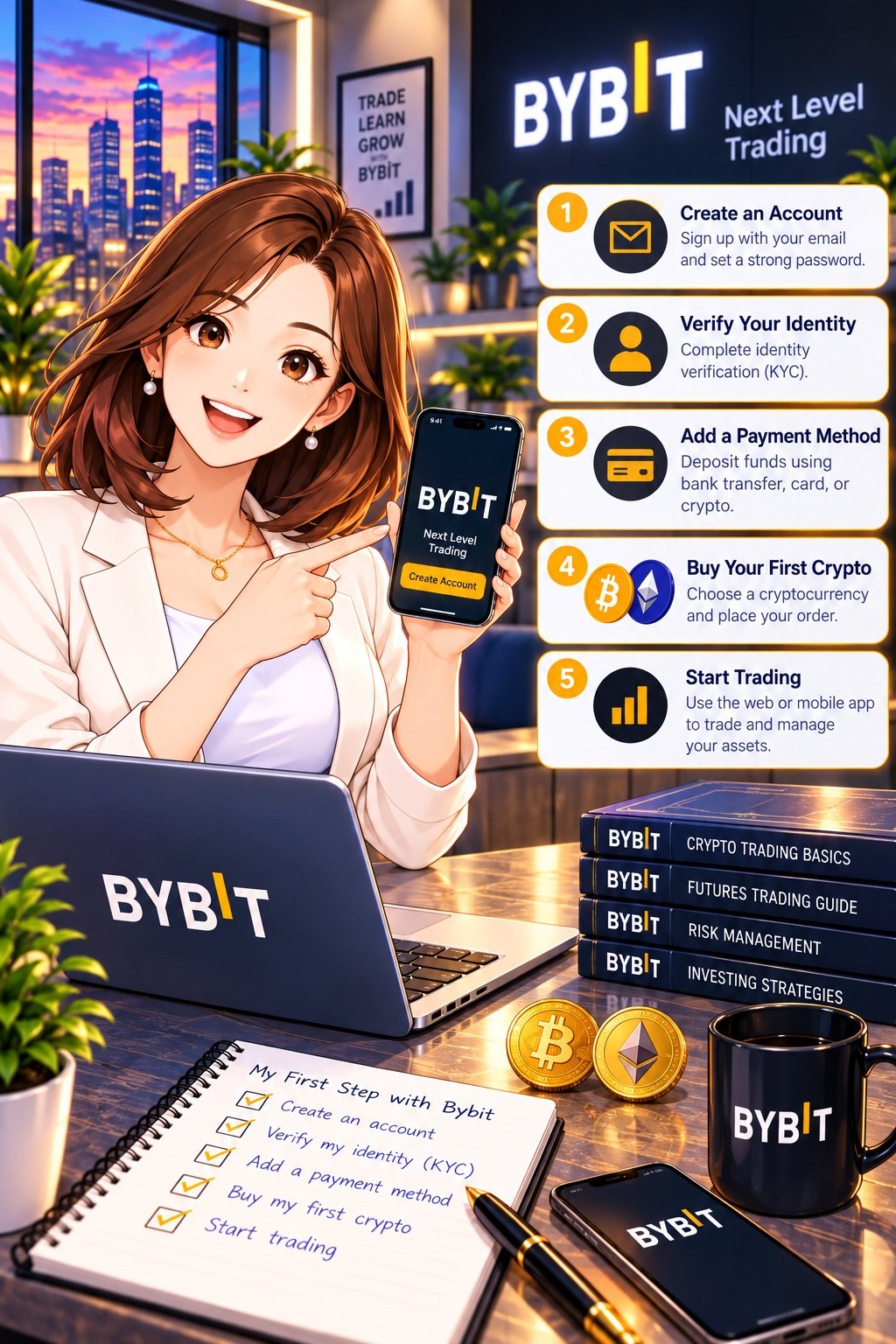
Bybit is a cryptocurrency trading platform established in 2018. It became known for cryptocurrency derivatives trading and subsequently expanded its range of digital asset services.
Its product ecosystem has included spot trading, perpetual contracts, other derivatives, trading tools, and additional cryptocurrency-related services. However, the exact products available to a customer depend on the relevant operating entity, jurisdiction, account eligibility, and current platform policies.
Bybit should be understood as a trading service provider rather than a cryptocurrency or blockchain network itself.
Bybit’s Development and Trading Focus
Bybit initially attracted attention through derivatives markets that allowed eligible traders to obtain exposure to cryptocurrency price movements using margin-based contracts.
As its services expanded, the platform introduced additional trading interfaces, spot markets, and account features intended for different levels of trading experience.
Its historical emphasis on derivatives is relevant because these products can involve substantially greater complexity than ordinary cryptocurrency spot transactions.
A broad selection of trading tools does not establish that a platform is suitable for beginners or that its users are likely to earn profits.
Bybit as a Centralized Cryptocurrency Exchange
Bybit provides centralized trading services through which eligible users may access supported markets and manage account balances.
In conventional order-book markets, buying and selling instructions are matched according to the platform’s trading rules and available liquidity.
Users should distinguish the trading platform’s account infrastructure from independent blockchain wallets in which individuals directly control private keys.
For a general explanation of exchange infrastructure, read how cryptocurrency exchanges work.
Bybit and Digital Asset Custody
Assets maintained through a centralized exchange account generally depend on the service provider’s custody and operational arrangements.
Account balances may be displayed through the trading interface, but this does not necessarily mean the user personally controls the private keys associated with the underlying assets.
Centralized custody introduces risks involving service interruptions, account restrictions, cybersecurity incidents, and the provider’s financial or operational condition.
Self-custody introduces different responsibilities, including the protection of private keys and recovery information.
Our guide to custodial versus non-custodial wallets explains these differences.
How Does Bybit Work?
Bybit provides electronic trading infrastructure for supported cryptocurrency markets. Eligible users may access market information, submit orders, monitor positions, and review account activity through available interfaces.
The mechanisms differ between spot transactions and derivatives contracts. Understanding this distinction is essential before evaluating the platform’s trading features.
Trading Pairs
A trading pair represents the exchange relationship between two assets.
For example, BTC/USDT expresses the price of Bitcoin in units of USDT. In a spot market, a user buying BTC with USDT generally exchanges one asset for another according to the executed transaction.
In a derivatives market, a contract referencing BTC/USDT may instead provide exposure to price movements without requiring the same asset exchange as a spot transaction.
The contract specifications determine the actual rights, obligations, collateral requirements, and settlement arrangements.
Order Books and Market Liquidity
An order book contains available buying and selling instructions at different prices and quantities.
The highest available bid and lowest available ask help establish the bid-ask spread.
Liquidity affects how readily orders can execute without substantially changing the market price.
Even markets that ordinarily display substantial liquidity may experience sharp changes during volatility, technical interruptions, or periods of market stress.
Order Execution and Slippage
The displayed market price does not guarantee that an order will execute at exactly that price.
Actual execution depends on the order type, available liquidity, transaction size, and market conditions.
Slippage occurs when the execution price differs from the price initially expected. It can increase during rapid market movements or in less-liquid trading pairs.
Bybit Account Registration and Identity Verification
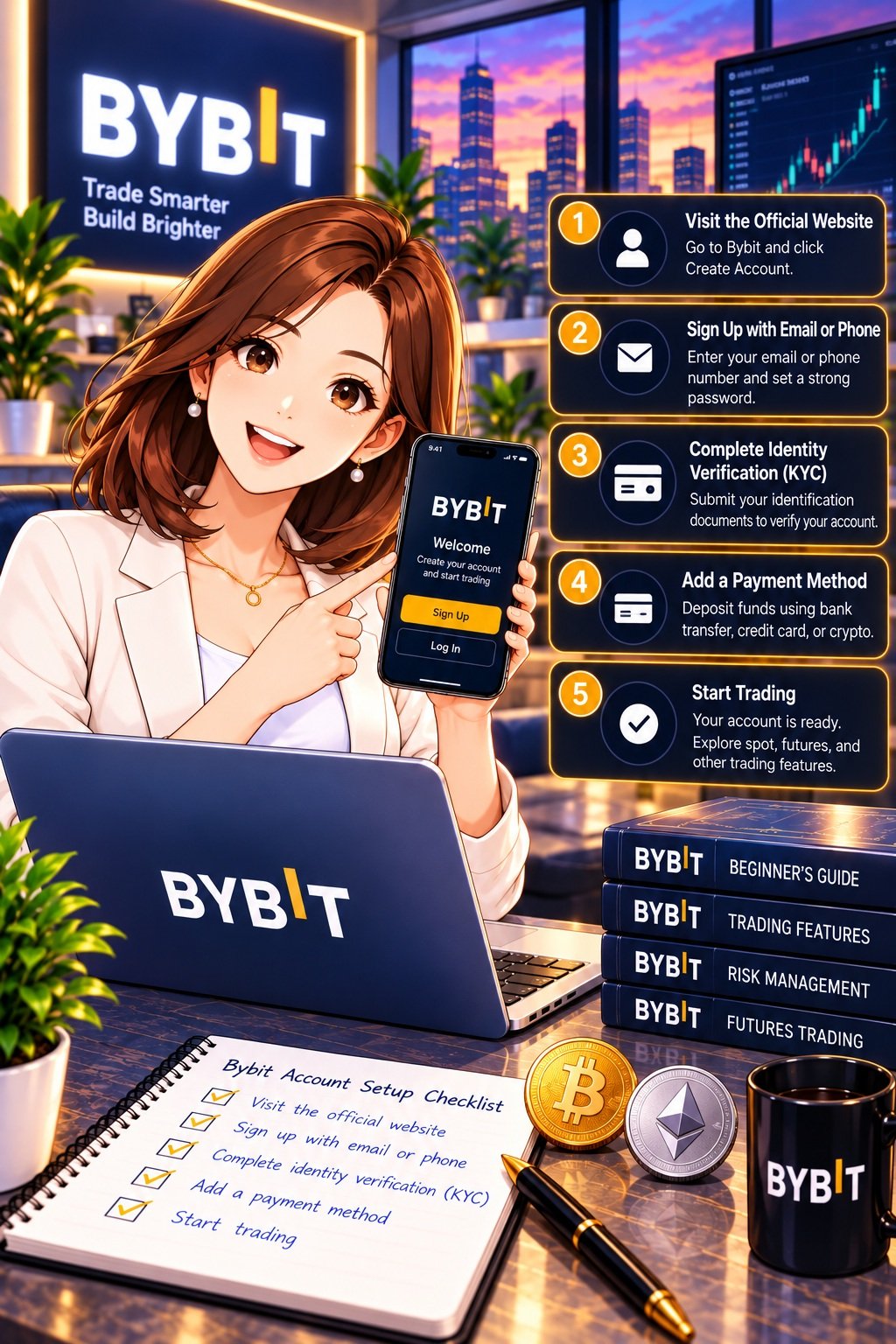
Bybit’s account registration and identity verification procedures depend on applicable service terms, legal requirements, and account eligibility.
Before considering any account, readers should determine whether Bybit officially supports their country of residence and the intended product.
The following explanation is educational and does not constitute an invitation to register or use a service in a restricted jurisdiction.
Step 1: Confirm Geographic Eligibility
Bybit restricts services in certain countries and territories. These restrictions may apply to the entire platform or to particular products.
Users should examine the current official restricted-jurisdiction information and applicable service agreement.
Access to a website or application does not establish legal eligibility. Users must not attempt to bypass geographic restrictions using false identity information, misleading residency details, or unauthorized access methods.
Step 2: Understand Registration Requirements
Eligible users may be required to provide an email address or telephone number, establish account credentials, and accept the relevant service terms.
Registration methods can change, and completing an initial account form does not guarantee approval for trading or other services.
Readers should independently verify the authenticity of the official website and application before entering personal information.
Step 3: Complete Identity Verification
Know Your Customer (KYC) procedures help service providers verify customer identity and comply with applicable financial crime prevention requirements.
Depending on the account and jurisdiction, Bybit may require government-issued identification, personal details, facial verification, or additional supporting documents.
Verification requirements and permitted account activities may change over time.
Successful identity verification does not automatically establish eligibility for every derivatives contract, financial product, or regional service.
Step 4: Review Security Settings
Eligible account holders should examine available authentication methods, device management options, withdrawal controls, and security notifications before funding an account.
Strong passwords and supported multi-factor authentication methods can help reduce certain unauthorized-access risks.
However, no authentication method eliminates all cybersecurity or custody risks.
Our separate guide explains how to secure a cryptocurrency exchange account.
Step 5: Understand Deposit Methods
Supported funding methods may include eligible cryptocurrency deposits or regionally available payment services.
Availability depends on the relevant operating entity, payment provider, account verification status, and jurisdiction.
Before transferring assets, users should confirm supported networks, minimum amounts, processing conditions, and applicable fees.
Step 6: Verify Blockchain Transfer Details
Blockchain transfers can be irreversible. Sending cryptocurrency to an incorrect address or through an incompatible network may cause permanent asset loss.
Users should verify both the asset and the blockchain network supported by the receiving platform.
For additional guidance, consult how to choose the correct crypto network.
Bybit Trading Features Explained

Bybit has offered several categories of trading services, including spot markets and derivatives products. Certain account features and trading tools may be unavailable in particular jurisdictions.
These products differ in their mechanisms, complexity, and financial risks.
Spot Trading
Spot trading generally involves exchanging one cryptocurrency or digital asset for another through an eligible trading market.
For example, a BTC/USDT spot transaction may involve exchanging USDT for Bitcoin according to the executed price and applicable trading rules.
Spot trading using available balances does not automatically involve leverage or borrowing.
However, spot cryptocurrency prices can decline sharply, and users may lose a substantial portion or all of the value committed.
Market Orders
A market order generally seeks execution against available liquidity rather than specifying a fixed limit price.
Its final execution price may differ from the most recently displayed price, particularly during volatile conditions.
Users should understand the potential effects of slippage before submitting market orders.
Limit Orders
A limit order allows a trader to specify the maximum purchase price or minimum sale price they are willing to accept.
Although limit orders establish price conditions, they do not guarantee execution.
An order may remain open, execute partially, or fail to execute if the required market conditions are not met.
Perpetual Futures Contracts
Perpetual futures are derivatives designed to provide exposure to the price movements of an underlying asset without a conventional fixed expiration date.
Unlike ordinary spot transactions, perpetual contracts involve contractual positions that are subject to margin requirements, settlement rules, and other product-specific conditions.
Many perpetual futures markets use funding mechanisms intended to help align contract prices with the underlying reference market.
Funding payments may create additional costs or receipts depending on the contract, position direction, and prevailing funding rate.
Perpetual contracts can be highly complex and may expose traders to rapid financial losses.
Leverage and Margin
Leverage allows a trader to control a position with a notional value greater than the collateral initially committed.
For example, a position using 5x leverage may have a notional exposure approximately five times the initial margin, before considering fees, margin requirements, and other contract conditions.
Leverage amplifies both favorable and unfavorable price movements relative to the collateral committed.
A relatively small adverse market movement may therefore produce a substantial loss of margin.
Higher leverage also generally reduces the amount of adverse price movement a position can withstand before reaching critical margin conditions.
Liquidation Risk
Liquidation occurs when a leveraged position no longer satisfies applicable maintenance margin requirements or other contractual risk conditions.
Depending on the product and margin arrangement, the platform may reduce or close the position automatically.
Liquidation prices can be affected by collateral, maintenance margin, funding payments, trading fees, and other factors.
Liquidation may cause rapid or complete loss of committed collateral. Certain arrangements may also involve additional liabilities under their applicable terms.
Stop-loss orders and other risk controls do not guarantee that liquidation or unexpected losses can always be prevented.
Isolated Margin Versus Cross Margin
Isolated margin generally allocates a defined amount of collateral to a particular position, subject to the applicable contract rules.
Cross margin arrangements may use a broader pool of eligible account collateral to support positions.
These arrangements can affect how losses, margin requirements, and liquidation risks are distributed across an account.
Neither margin mode eliminates the risks of leveraged trading.
Copy Trading
Bybit has offered copy-trading features that may allow eligible users to follow or replicate selected trading activity.
Copy trading does not guarantee that followers will achieve the same results as the trader being followed.
Execution differences, position sizing, leverage, timing, market volatility, and fees can produce materially different outcomes.
Historical returns are not reliable guarantees of future performance, and copying a trader can reproduce losses as well as gains.
Trading Bots and Automated Strategies
Bybit has offered automated trading tools and strategy-related features for certain eligible users.
Automation may execute predefined instructions, but it does not independently determine whether a strategy is financially sound.
Automated systems can experience losses because of market volatility, incorrect settings, execution conditions, technical failures, or unsuitable strategies.
Users should understand the relevant mechanisms and risks rather than assuming that automation creates passive or guaranteed income.
Earn and Other Digital Asset Products
Depending on jurisdiction and current availability, Bybit’s broader ecosystem may include digital asset earning programs or other financial products.
These arrangements may involve variable rewards, counterparty exposure, liquidity restrictions, lock-up periods, or additional contractual conditions.
Terms such as “earn,” “savings,” or “rewards” should not be interpreted as guarantees of principal protection or investment returns.
Readers should evaluate the specific product’s terms, risks, and eligibility requirements before considering its use.
Bybit Trading Fees and Transaction Costs
Understanding Bybit trading fees is particularly important because the platform offers different types of cryptocurrency markets, including spot trading and derivatives products for eligible users.
The total cost of a transaction depends on the trading product, order type, account fee tier, execution conditions, and any additional charges associated with the position.
Bybit’s published fee schedules and promotional arrangements may change. Users should verify current rates directly through the official platform rather than relying on historical percentages.
Spot Trading Fees
Spot trading generally involves exchanging one supported digital asset for another through an eligible market.
Bybit may apply maker and taker fees according to the relevant market and account conditions.
A maker order generally adds liquidity to an order book, while a taker order removes available liquidity.
Importantly, placing a limit order does not automatically guarantee maker-fee treatment. A limit order that immediately matches existing liquidity may be classified as a taker order.
Futures Trading Fees
Derivatives trading can involve transaction fees that differ from those applicable to ordinary spot markets.
Opening and closing a futures position may each generate trading fees, depending on the contract and execution conditions.
Because leveraged positions can have a notional value substantially greater than the collateral committed, traders should understand how fees are calculated on the relevant contract value.
Frequent trading may accumulate significant transaction costs even when the advertised fee percentage appears relatively small.
Perpetual Futures Funding Rates
Funding payments are an important feature of many perpetual futures contracts.
These payments are generally designed to help keep perpetual contract prices aligned with the underlying reference market.
Depending on the funding rate and position direction, eligible long or short position holders may pay or receive funding at specified intervals.
Funding rates can change and may become substantial during unusual market conditions.
A position that appears profitable before funding charges may produce a different net result after those costs are included.
Margin Borrowing Costs
Where margin borrowing is available, interest or other financing charges may apply to borrowed assets or funds.
The applicable rate can depend on the borrowing arrangement, asset, account eligibility, and prevailing platform conditions.
Borrowing introduces repayment obligations that remain relevant even when the underlying trading position loses value.
Liquidation-Related Costs
Liquidation can create losses beyond ordinary trading fees because a position may be closed under unfavorable market conditions.
Depending on the contract, applicable rules, and liquidation mechanism, additional charges or adjustments may affect the remaining collateral.
Users should examine maintenance margin requirements, liquidation procedures, and the treatment of any remaining balance before considering leveraged positions.
Spreads and Slippage
The bid-ask spread represents the difference between the highest available buying price and the lowest available selling price.
Slippage occurs when an order executes at a price different from the price initially expected.
Both can increase effective transaction costs, especially during rapid price movements or in markets with limited liquidity.
These execution costs should be evaluated separately from the exchange’s published maker and taker fees.
Deposit and Withdrawal Fees
Cryptocurrency deposits and withdrawals may involve blockchain network costs, exchange-specific charges, minimum amounts, and supported-network restrictions.
Fees can vary according to the digital asset, selected network, and current transaction conditions.
Before transferring cryptocurrency, users should verify the destination address, supported network, and final amount expected to arrive.
Our guide to cryptocurrency network fees explains the distinction between blockchain transaction costs and other exchange charges.
How to Compare Total Bybit Trading Costs
A complete comparison should consider the following factors:
- Spot maker and taker fees.
- Derivatives trading fees.
- Perpetual futures funding payments.
- Borrowing interest where applicable.
- Potential liquidation-related charges.
- Bid-ask spreads and slippage.
- Deposit, withdrawal, and blockchain network costs.
- Any product-specific or account-related charges.
Important: Lower advertised trading fees do not necessarily mean lower total costs. A meaningful comparison must account for the actual product, execution conditions, and associated financial risks.
Bybit Security Features and Account Protection
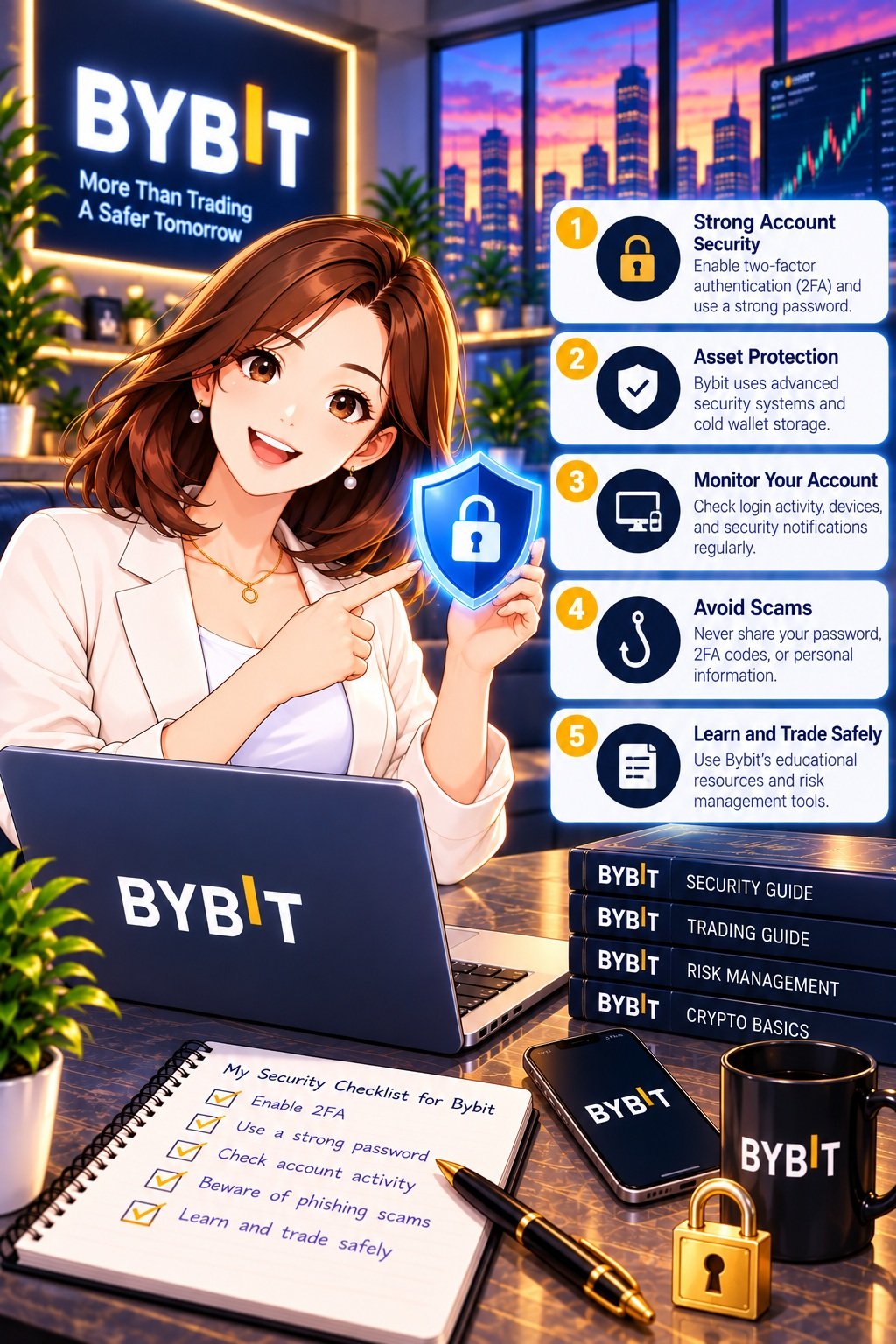
Security is a central consideration when evaluating Bybit, particularly because centralized exchanges may hold customer assets and provide access to complex trading products.
Bybit has described various account protection and asset custody measures. However, the presence of security controls does not guarantee that customer funds or account access will remain unaffected by cyberattacks, operational failures, or financial distress.
Two-Factor Authentication
Multi-factor authentication adds an additional verification requirement beyond a password.
Depending on current account options, Bybit may support authentication applications or other verification mechanisms.
Users should review available authentication methods and protect associated recovery information.
Authentication codes should never be disclosed to anyone claiming to provide account support.
Strong Passwords and Device Security
Account protection begins with strong, unique credentials and secure personal devices.
Reusing passwords across multiple services can increase exposure when another website experiences a data breach.
Users should also keep operating systems, browsers, and security software updated to reduce exposure to known vulnerabilities.
Anti-Phishing Measures
Fraudulent websites and impersonation messages may imitate Bybit branding to obtain credentials or persuade users to authorize unauthorized transfers.
Users should verify official website addresses and communication channels independently.
Unexpected messages requesting passwords, verification codes, private keys, or seed phrases should be treated as potential security threats.
Additional guidance is available in our article on avoiding cryptocurrency scams.
Withdrawal Protection
Depending on the account and current platform features, withdrawal security controls may include additional authentication, address management, or verification procedures.
These controls can help reduce certain unauthorized-transfer risks but cannot guarantee recovery after an irreversible blockchain transaction.
Users should carefully verify addresses and supported networks before approving withdrawals.
Cold Storage and Custody Arrangements
Bybit has described using security arrangements involving offline storage and other custody controls for certain digital assets.
Cold storage can reduce exposure to some internet-based threats, but it does not eliminate every operational or counterparty risk.
Users should distinguish technical custody measures from legal ownership arrangements, financial solvency, and the ability to access assets during a service disruption.
Bybit Security Incident History
In February 2025, Bybit disclosed a major security incident involving approximately $1.5 billion in Ethereum-related assets. The incident demonstrated that substantial cybersecurity risks can remain even when a platform uses established custody and security procedures.
The event is relevant when evaluating exchange security because the consequences of a custody-system compromise can extend beyond individual account protection.
Readers should review official incident disclosures, subsequent remediation measures, and independently available evidence rather than assuming that either historical incidents or later security improvements establish the platform’s current safety.
Proof of Reserves
Bybit has published proof-of-reserves information concerning certain customer assets and reserve arrangements.
Such disclosures may provide information about reported asset holdings and liabilities within the scope of a particular verification methodology.
However, proof of reserves should not automatically be interpreted as a complete independent financial statement audit or an unconditional guarantee of solvency.
Users should examine the report’s scope, date, methodology, and limitations before drawing conclusions about asset protection.
Insurance Funds and Derivatives Risk Controls
Certain derivatives markets use insurance funds or other risk-management mechanisms intended to address particular liquidation and settlement situations.
These arrangements operate according to product-specific rules and should not be confused with general deposit insurance or a guarantee that traders cannot lose their collateral.
Insurance funds may not cover every loss, market event, or account circumstance.
Security Responsibilities for Users
Even where exchange-level protections are available, users remain responsible for securing their own accounts and understanding the risks of the services they use.
Important precautions include:
- Using strong and unique account credentials.
- Enabling supported multi-factor authentication.
- Reviewing account activity and security notifications.
- Verifying official websites and communications.
- Protecting withdrawal information and recovery credentials.
- Understanding custody and counterparty exposure.
- Avoiding unauthorized access methods and suspicious applications.
For further practical information, see our guide to securing a cryptocurrency exchange account.
Bybit Regulation and Geographic Restrictions
Bybit’s services are subject to regulatory requirements, operating-entity arrangements, and country-specific restrictions.
Readers should not assume that a platform’s international presence means every product is legally available in every jurisdiction.
Restricted Jurisdictions
Bybit’s official terms identify jurisdictions where certain services are restricted or unavailable.
Restrictions have included major markets such as the United States and other specified countries or territories, although the complete list and applicable conditions may change.
Users should consult the current official service agreement and restricted-jurisdiction disclosures before considering any Bybit service.
Derivatives-Specific Restrictions
Derivatives products may face stricter regulatory requirements than ordinary spot cryptocurrency transactions.
Consequently, eligibility for spot trading does not automatically establish eligibility for futures, perpetual contracts, margin products, or other leveraged services.
Users should verify the availability and legality of each intended product separately.
Identity Verification and Compliance
Bybit may require identity verification and additional information to satisfy applicable legal and compliance obligations.
Verification requirements can differ by service, account type, and jurisdiction.
Providing false identity or residency information can violate platform terms and potentially applicable laws.
Regional Licensing and Operating Entities
Bybit-related services may operate through different legal entities or regulatory arrangements in different regions.
An authorization granted to one entity or for one category of service should not be assumed to apply to every Bybit-branded product worldwide.
Readers should verify the specific operating entity and applicable regulatory status for their jurisdiction.
Changes in Regulatory Availability
Cryptocurrency regulations and exchange operating permissions can change over time.
These changes may affect account eligibility, supported products, payment methods, withdrawal arrangements, or continued access to particular services.
Compliance principle: Users should not attempt to bypass geographic restrictions, identity verification requirements, or product limitations through VPN-based misrepresentation, false documents, or inaccurate residency details.
Advantages and Limitations of Bybit
Bybit’s trading infrastructure may be relevant to users researching cryptocurrency derivatives and advanced trading tools. However, product complexity and exchange-related risks must be considered alongside available functionality.
Potential Advantages
- Derivatives functionality: Eligible users may have access to perpetual contracts, futures markets, and related trading tools.
- Spot markets: Supported users may trade eligible cryptocurrency pairs without necessarily using leverage.
- Advanced order controls: Available interfaces may include market data, charting tools, and different order types.
- Risk-management features: Certain products provide margin settings and other position-management controls.
- Copy trading: Eligible users may be able to research or follow trading strategies, subject to substantial financial risks.
- Educational resources: Platform materials may help explain trading mechanisms and digital asset concepts.
Important Limitations
- Leverage risk: Derivatives can produce rapid losses and liquidation.
- Product complexity: Margin modes, funding rates, and contract specifications may be difficult for beginners to understand.
- Geographic restrictions: Services are unavailable or restricted in certain jurisdictions.
- Custody dependence: Exchange-held assets are exposed to provider-related operational and counterparty risks.
- Cybersecurity exposure: Historical security incidents demonstrate the potential consequences of custody-system compromise.
- Variable transaction costs: Trading fees, funding payments, spreads, and withdrawal charges can affect outcomes.
- Market volatility: Cryptocurrency prices and derivatives markets can experience extreme movements.
- Copy-trading losses: Following another trader does not guarantee matching results or positive returns.
These characteristics should be evaluated according to the reader’s experience, intended activity, legal eligibility, and ability to understand the associated risks.
How Bybit Compares With Other Cryptocurrency Exchanges
Bybit is one of several cryptocurrency platforms that offer trading and related digital asset services.
Binance, Coinbase, Bitget, MEXC, and Gate.io provide different combinations of spot markets, derivatives, account tools, custody arrangements, and other features.
Bybit’s historical focus on derivatives and advanced trading interfaces may be relevant to readers researching futures markets, while other platforms may emphasize different aspects of the cryptocurrency ecosystem.
However, the presence of advanced features does not establish that one platform is universally superior or more appropriate for a particular user.
A meaningful comparison should consider regulatory eligibility, security history, custody risks, total transaction costs, market liquidity, and product complexity.
For a broader educational comparison, read our best crypto exchanges compared guide.
Readers should verify current exchange information and product eligibility directly through official documentation before making any financial or account-related decisions.
Common Bybit Beginner Mistakes to Avoid
Bybit offers a range of cryptocurrency trading features, but the availability of advanced tools does not mean that every product is appropriate for inexperienced users.
Understanding common mistakes can help readers recognize the differences between ordinary cryptocurrency transactions and more complex trading arrangements.
Confusing Spot Trading With Futures Trading
Spot trading generally involves exchanging supported digital assets, while futures trading involves contracts linked to underlying asset prices.
These products have different settlement mechanisms, margin requirements, and risk characteristics.
Users should understand which type of market they are researching before evaluating its trading interface or costs.
Using Leverage Without Understanding Liquidation
Leverage increases exposure relative to the collateral initially committed.
Although leverage can amplify favorable price movements, it also magnifies losses and can cause positions to reach liquidation conditions rapidly.
Users should not assume that stop-loss orders, automated controls, or available margin will prevent every potential loss.
Ignoring Perpetual Futures Funding Payments
Perpetual contracts may involve periodic funding payments between eligible long and short position holders.
These payments can affect the net outcome of a position independently of the direction of the underlying asset’s price.
Users should examine the contract’s funding mechanism and applicable charges rather than evaluating performance solely through price movements.
Following Copy Traders Without Independent Evaluation
Copy trading can expose followers to another trader’s strategy, including its use of leverage, position sizing, and risk controls.
Historical performance does not guarantee future results. Followers may experience different execution prices, fees, and outcomes.
Users should not assume that copying an experienced trader eliminates the possibility of substantial losses.
Overlooking Account Security
Weak passwords, compromised devices, phishing messages, and fraudulent support communications can create serious account security risks.
Users should review available authentication methods, monitor account activity, and independently verify official communication channels.
Using the Wrong Blockchain Network
Some cryptocurrencies are supported on multiple blockchain networks, but not every receiving platform supports every version or network.
Incorrect network selection can result in delayed transfers or permanent asset loss.
For additional guidance, read our guide to choosing the correct cryptocurrency network.
Assuming Exchange Security Guarantees Asset Protection
Account authentication, offline custody arrangements, reserve disclosures, and other security measures may help manage certain risks.
However, they do not eliminate cybersecurity threats, operational interruptions, custody failures, or cryptocurrency market losses.
Ignoring Country Restrictions
Bybit services are subject to geographic eligibility requirements and product-specific restrictions.
Users should verify their legal eligibility before considering any service and should not attempt to bypass restrictions through inaccurate residency information or unauthorized access methods.
How to Evaluate Bybit Before Using Its Services
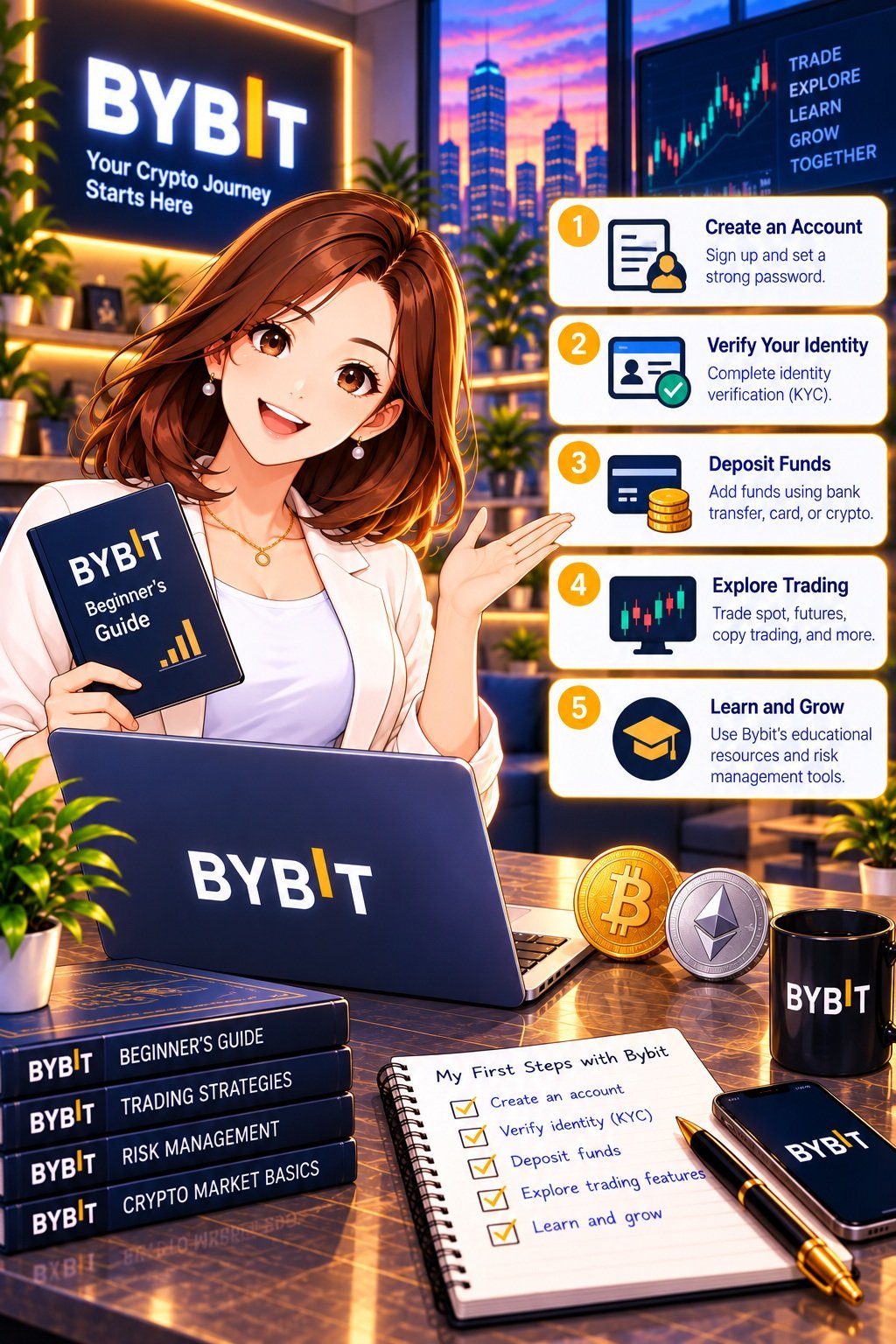
A structured evaluation process can help readers understand whether Bybit’s available products match their experience, objectives, and legal circumstances.
Step 1: Confirm Geographic Eligibility
Begin by reviewing the current official service agreement and restricted-jurisdiction information.
Verify whether the relevant Bybit operating entity is permitted to provide the intended service in your country of residence.
Eligibility for one product does not automatically establish eligibility for every trading service.
Step 2: Identify the Intended Trading Product
Determine whether you are researching spot markets, perpetual futures, other derivatives, or additional digital asset services.
Each product category involves different contractual arrangements, financial obligations, and risks.
Step 3: Examine Total Trading Costs
Review the applicable maker and taker fees, spreads, slippage, funding payments, borrowing costs, and withdrawal charges.
Compare the total cost of the intended transaction rather than relying only on advertised fee percentages.
Step 4: Understand Margin and Liquidation Rules
For any margin-based product, examine initial margin, maintenance margin, collateral requirements, funding mechanisms, and liquidation procedures.
Understand how adverse market movements can affect the position and whether additional liabilities may arise under the applicable terms.
Step 5: Review Security and Custody Arrangements
Investigate available authentication methods, withdrawal protections, custody disclosures, and relevant security incident information.
Consider the risks associated with relying on a centralized service provider to maintain access to digital assets.
Step 6: Verify Deposit and Withdrawal Conditions
Check supported assets, blockchain networks, minimum transaction amounts, withdrawal restrictions, and applicable fees.
Do not assume that a cryptocurrency transfer can be reversed after it has been confirmed on a blockchain.
Step 7: Compare Alternative Exchanges
Evaluate Bybit alongside other cryptocurrency platforms using consistent criteria such as legal eligibility, transaction costs, available markets, custody risks, and operational reliability.
Our best crypto exchanges compared guide provides a broader educational comparison.
Step 8: Make an Independent Assessment
Consider your understanding of cryptocurrency markets, ability to manage risk, financial circumstances, and experience with complex trading products.
Do not interpret the availability of leverage, automated strategies, or copy trading as evidence that profitable results are likely.
Frequently Asked Questions
What is Bybit?
Bybit is a cryptocurrency trading platform established in 2018. Its services have included spot markets, derivatives, advanced trading tools, and other digital asset products for eligible users.
Is Bybit mainly a futures trading platform?
Bybit became widely associated with cryptocurrency derivatives trading, including perpetual contracts. Its broader ecosystem has also included spot markets and additional services.
Does Bybit offer spot trading?
Bybit has offered spot trading for supported digital assets. Available trading pairs and account eligibility depend on the relevant jurisdiction and current service arrangements.
What is a Bybit perpetual futures contract?
A perpetual futures contract is a derivative that provides exposure to an underlying asset’s price movements without a conventional fixed expiration date. Such contracts may involve leverage, margin requirements, funding payments, and liquidation risks.
What does leverage mean on Bybit?
Leverage allows a trader to control a position with a notional value greater than the initial collateral. It magnifies both gains and losses and can cause rapid liquidation when margin requirements are no longer satisfied.
Can traders lose their entire margin?
Yes. Leveraged trading can result in the loss of all collateral committed to a position. Depending on the contract and applicable margin arrangements, additional liabilities may also arise.
What is the difference between isolated and cross margin?
Isolated margin generally assigns collateral to a particular position, while cross margin may use a broader pool of eligible account collateral. The applicable rules determine how losses and liquidation risks affect the account.
What are Bybit funding rates?
Funding rates are used in certain perpetual futures markets to help align contract prices with underlying reference markets. Depending on the rate and position direction, traders may pay or receive funding payments.
Does Bybit offer copy trading?
Bybit has offered copy-trading features for eligible users. These services may allow followers to replicate selected trading activity, but results can differ from those of the original trader and losses remain possible.
Does Bybit charge trading fees?
Yes. Applicable fees depend on the trading product, order type, account conditions, and current pricing arrangements. Derivatives may also involve funding payments and other product-specific costs.
Is Bybit suitable for beginners?
Suitability depends on the user’s experience, intended activities, legal eligibility, and understanding of risk. Advanced derivatives and leveraged products can be particularly difficult for inexperienced traders to evaluate.
Is Bybit completely safe?
No cryptocurrency exchange can guarantee complete safety. Bybit users may face cybersecurity, custody, market, regulatory, operational, and counterparty risks.
Has Bybit experienced a major security incident?
Yes. In February 2025, Bybit disclosed a major security incident involving approximately $1.5 billion in Ethereum-related assets. The incident highlights the importance of examining security history and custody risks when evaluating an exchange.
Does Bybit proof of reserves guarantee solvency?
No. Proof-of-reserves disclosures may provide information about certain reported assets and liabilities within a defined methodology, but they are not necessarily equivalent to a complete independent financial statement audit or a guarantee of solvency.
Can United States residents use Bybit?
Bybit has identified the United States as a restricted jurisdiction for its international services. Readers should verify current official restrictions and should not attempt to bypass geographic eligibility requirements.
Is Bybit available in every country?
No. Bybit services are subject to geographic restrictions, operating-entity arrangements, and product-specific eligibility requirements. Supported jurisdictions and services may change.
Can I withdraw cryptocurrency from Bybit?
Eligible accounts may support withdrawals of selected digital assets through available blockchain networks, subject to identity verification, account restrictions, withdrawal limits, security reviews, and applicable fees.
Before authorizing a transfer, users should verify the destination address, supported network, transaction amount, and current withdrawal conditions. Incorrect blockchain transfers may be irreversible.
Key Takeaway
This Bybit exchange guide explains the platform’s spot markets, derivatives products, trading costs, security arrangements, geographic restrictions, and major financial risks.
Bybit’s historical emphasis on cryptocurrency derivatives and advanced trading tools distinguishes it from platforms that focus primarily on simplified consumer trading experiences.
However, sophisticated trading functionality does not guarantee better outcomes. Leverage, margin requirements, funding payments, and liquidation mechanisms can create substantial financial exposure.
Readers should evaluate Bybit according to their legal eligibility, understanding of the intended product, transaction costs, custody risks, and ability to manage potential losses.
The platform’s security history, current protection measures, and regulatory arrangements are also important considerations.
Before making any account-related or financial decision, users should verify current official information and compare alternative services using objective criteria.
No cryptocurrency exchange, automated strategy, or trading product can guarantee profitable results.
Official Sources and Further Information
Bybit’s services, fees, trading rules, and geographic restrictions may change. Readers should consult current official documentation for accurate information.
- Bybit Official Website — General platform information and available services.
- Bybit Help Center — Account verification, trading products, security, and operational guidance.
- Bybit Trading Fee Structure — Information about applicable trading fee arrangements.
- Bybit Restricted Jurisdictions — Geographic eligibility and service restrictions.
- Bybit Proof of Reserves — Reserve disclosure information and related methodology.
These links are provided for educational reference. They are not referral or affiliate tracking links, and their inclusion does not constitute an endorsement.
Educational Disclaimer
This article is provided for general educational and informational purposes only. It does not constitute investment, financial, legal, tax, or personalized trading advice.
CryptoWikiHub is an independent educational website. This article is not an official Bybit publication and does not imply sponsorship, authorization, or endorsement by Bybit.
Cryptocurrency trading involves substantial financial risk, including the possibility of losing the entire amount committed. Derivatives, margin trading, and leveraged positions introduce additional risks, including rapid liquidation and potentially greater losses depending on the applicable product terms.
Copy trading, automated strategies, and digital asset earning products do not guarantee profits or protection of principal. Historical performance should not be interpreted as a reliable prediction of future results.
Bybit’s services, trading fees, supported assets, regulatory permissions, and geographic restrictions may change without notice. Readers should verify current information and their legal eligibility directly through the relevant official sources.
Security controls, custody arrangements, proof-of-reserves disclosures, and derivatives insurance funds do not guarantee protection against all losses, account compromises, operational failures, or counterparty risks.
AI-generated illustrations in this article are educational visual aids. They are not verified screenshots of actual Bybit interfaces, live market prices, real account balances, or official product demonstrations. Any illustrated prices, charts, performance figures, or account details are fictional and should not be interpreted as actual trading results.
Bybit names, logos, and related trademarks belong to their respective owners. Their appearance in educational illustrations does not imply an official partnership or endorsement.
This article contains no referral codes, affiliate tracking links, or guaranteed-return promotions at the time of publication.