
Introduction
MEXC exchange guide: MEXC is a cryptocurrency trading platform known for offering a broad selection of digital assets, including established cryptocurrencies, smaller altcoins, and newly listed tokens. Its trading services have also included spot markets, futures contracts, and additional digital asset products for eligible users.
Access to a large number of cryptocurrencies can provide opportunities to research different blockchain projects, but it also creates important challenges. Newly listed assets may have limited liquidity, uncertain valuations, concentrated token ownership, and substantial price volatility.
This independent educational guide explains how MEXC works, its trading features, account requirements, newly listed token markets, trading costs, security considerations, and major risks.
The purpose is to help readers understand the platform and evaluate digital assets using objective criteria rather than promotional claims or expectations of guaranteed returns.
Readers comparing multiple platforms can explore our best crypto exchanges compared guide, which examines Binance, Coinbase, Bybit, Bitget, MEXC, and Gate.io.
What Is MEXC?

MEXC is a centralized cryptocurrency exchange established in 2018. The platform provides digital asset trading services and has developed a reputation for listing a wide range of cryptocurrencies.
Its product ecosystem has included spot trading, futures contracts, market information tools, and other cryptocurrency-related services. The exact products available depend on the user’s jurisdiction, account eligibility, and current platform policies.
MEXC as a Centralized Exchange
A centralized cryptocurrency exchange operates trading infrastructure through which eligible users can access supported markets and submit orders.
In conventional order-book markets, buy and sell orders are matched according to available liquidity and the platform’s trading rules.
Users generally interact with account balances and transaction records through the exchange interface rather than directly managing every underlying blockchain transaction.
For additional background, read our guide to how cryptocurrency exchanges work.
Why MEXC Is Associated With Altcoin Markets
MEXC is frequently discussed in connection with its broad selection of cryptocurrency trading pairs, including smaller and emerging digital assets.
Some tokens become available on MEXC relatively early in their exchange-trading history. However, a new listing does not necessarily mean that the underlying project is newly created.
Cryptocurrencies may already trade on decentralized exchanges or other platforms before appearing on MEXC.
Exchange availability should not be interpreted as verification of a project’s financial condition, technical security, or investment value.
Custody and Account Responsibilities
Assets maintained through a centralized exchange account generally depend on the provider’s custody and operational arrangements.
Users may face risks involving account restrictions, cybersecurity incidents, service interruptions, and counterparty exposure.
Self-custody wallets involve different responsibilities, including personal control and protection of private keys and recovery information.
Our guide to custodial versus non-custodial wallets explains these differences.
How MEXC Works
MEXC provides electronic trading infrastructure for supported cryptocurrency markets. Eligible users may review market prices, examine order books, submit trading instructions, and manage available account balances.
The mechanisms differ between spot transactions and derivatives contracts. Understanding these differences is important because the products involve different financial obligations and risks.
Cryptocurrency Trading Pairs
A trading pair represents the exchange relationship between two digital assets.
For example, BTC/USDT expresses the price of Bitcoin in units of USDT.
In a spot market, purchasing BTC with USDT generally involves exchanging one digital asset for another according to the executed transaction.
In a derivatives market, a contract referencing BTC/USDT may provide exposure to price movements without involving the same asset exchange as an ordinary spot transaction.
Order Books
An order book displays available buying and selling instructions at different prices and quantities.
Buy orders are commonly called bids, while sell orders are called asks.
The difference between the highest available bid and lowest available ask is known as the bid-ask spread.
Order-book conditions can change rapidly as market participants submit, modify, or cancel orders.
Liquidity
Liquidity describes how readily an asset can be traded without substantially affecting its market price.
Markets with deeper order books may support more efficient execution under normal conditions.
Smaller altcoins and newly listed tokens may have limited liquidity, which can create wider spreads and greater execution uncertainty.
Slippage
Slippage occurs when an order executes at a different price from the price initially expected.
It can become significant when market prices change rapidly or when available liquidity is insufficient at the expected price.
For example, a large market order in a thinly traded token may execute across several price levels, producing an average execution price substantially different from the initial quote.
MEXC Account Registration and Identity Verification
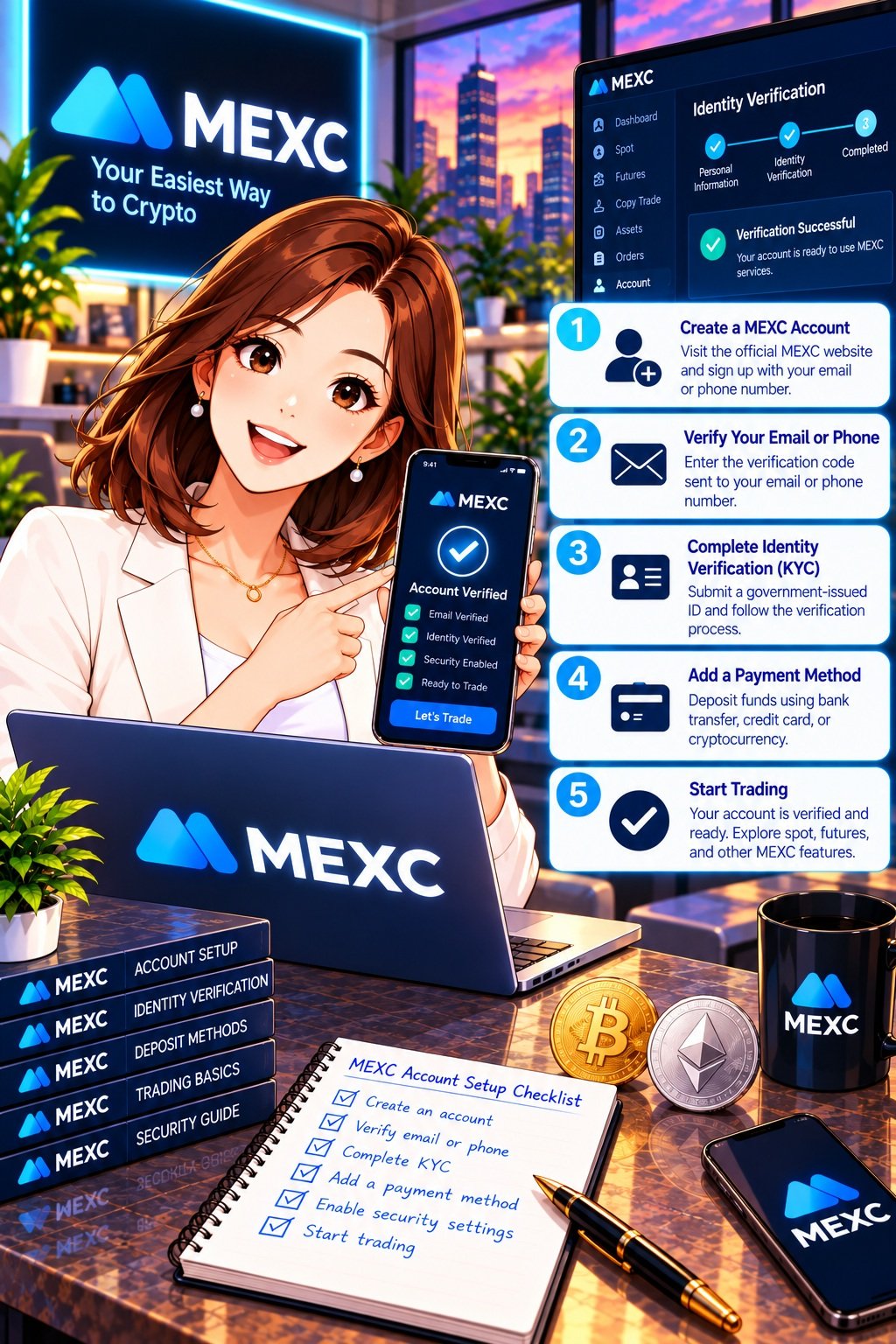
MEXC account requirements depend on the user’s jurisdiction, the relevant operating entity, identity verification status, and intended service.
The following overview is provided for educational purposes and does not constitute an invitation to register or access products that are restricted in a reader’s country of residence.
Step 1: Confirm Geographic Eligibility
Before considering an account, readers should verify whether MEXC officially supports their country or region of residence.
Service availability can differ between spot markets, futures products, payment services, and other platform features.
Access to the website or application does not establish legal eligibility for every service.
Step 2: Understand Account Requirements
Eligible applicants may be required to provide contact information, establish account credentials, and accept applicable service terms.
Registration requirements can change according to platform policies and legal obligations.
Users should verify official website addresses and avoid entering personal information through suspicious links.
Step 3: Complete Identity Verification
Know Your Customer (KYC) procedures help service providers verify customer identity and comply with applicable financial crime prevention requirements.
Depending on the account and jurisdiction, verification may involve government-issued identification, personal details, facial verification, or additional supporting documents.
Completing identity verification does not guarantee eligibility for every trading product or service.
Step 4: Review Account Security
Users should examine available authentication methods, device management controls, security notifications, and withdrawal protections.
Strong passwords and supported multi-factor authentication methods can help reduce certain unauthorized-access risks.
Our guide to securing a cryptocurrency exchange account
Step 5: Understand Funding Methods
Available funding methods may include supported cryptocurrency deposits and eligible regional payment services.
Processing times, transaction limits, payment charges, and withdrawal conditions can vary.
Users should review the applicable terms before transferring assets.
Step 6: Verify Blockchain Network Compatibility
Some cryptocurrencies exist on multiple blockchain networks.
Sending an asset through an incompatible network or to an incorrect address can result in permanent loss.
For additional guidance, read how to choose the correct cryptocurrency network.
MEXC Trading Features Explained
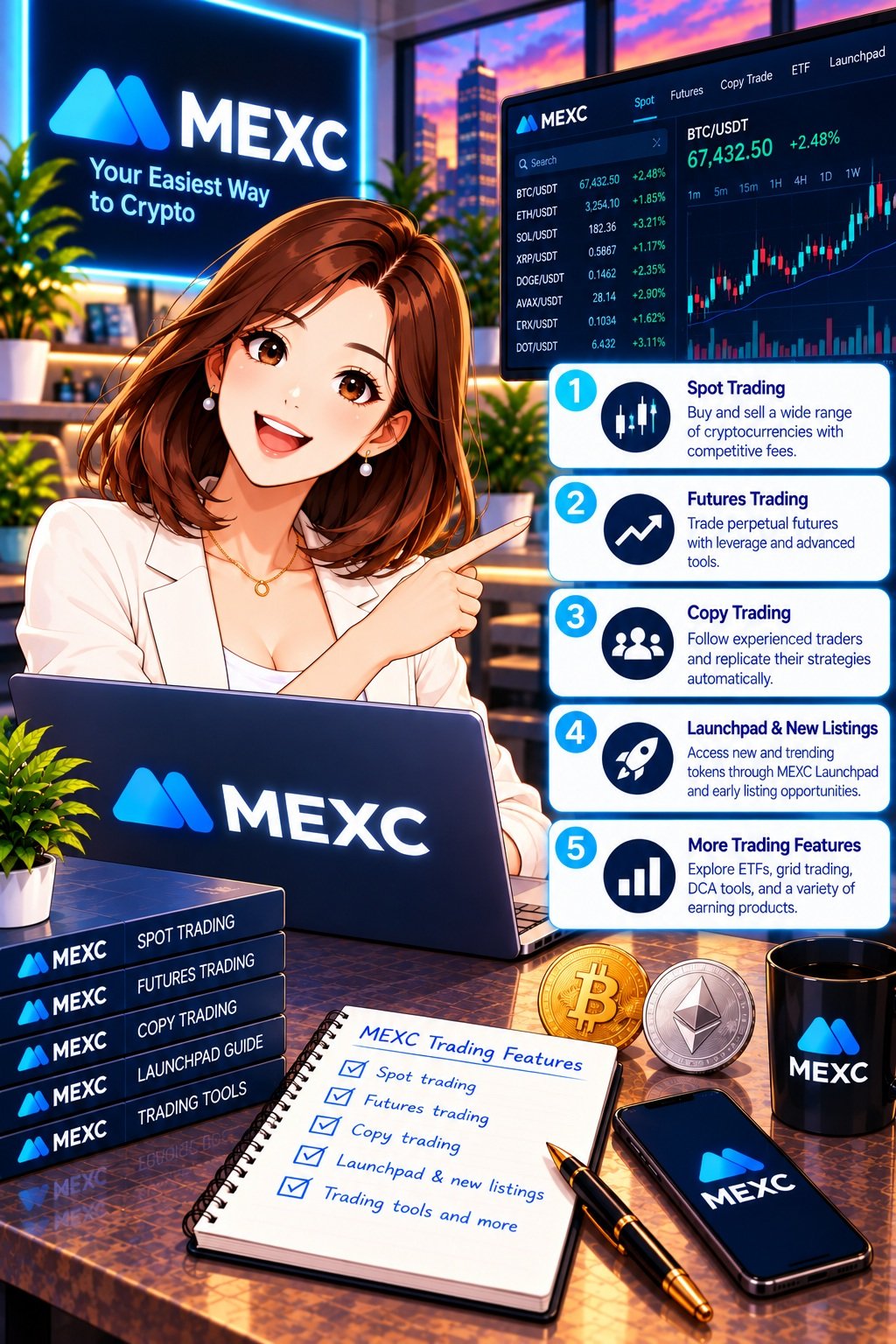
MEXC offers different categories of trading services, including spot markets and derivatives products for eligible users.
These services differ in their execution mechanisms, contractual arrangements, and financial risks.
Spot Trading
Spot trading generally involves exchanging one supported digital asset for another.
For example, a BTC/USDT spot transaction may involve exchanging USDT for Bitcoin at the executed price.
Spot trading using available balances does not automatically involve borrowing or leverage.
However, cryptocurrency prices can decline sharply, and users may lose a substantial portion or all of the value committed.
Market Orders
A market order generally seeks execution against available market liquidity.
It does not guarantee execution at the most recently displayed price.
Slippage may become substantial during volatile conditions or when trading pairs have limited liquidity.
Limit Orders
A limit order specifies the maximum purchase price or minimum sale price acceptable to the trader.
Limit orders establish price conditions but do not guarantee execution.
An order may remain open, execute partially, or fail to execute if the required market conditions are not met.
Futures and Perpetual Contracts
MEXC has offered futures and perpetual derivatives products for eligible users.
These contracts provide exposure to underlying asset price movements according to their specific contractual terms.
Perpetual contracts generally do not have a conventional fixed expiration date and may involve periodic funding payments.
Derivatives can introduce margin requirements, leverage, liquidation risks, and additional transaction costs.
Leverage and Liquidation
Leverage allows a trader to control a position with a notional value greater than the collateral initially committed.
For example, a position using 5x leverage may have approximately five times the notional exposure of its initial margin, before accounting for fees and contract-specific requirements.
Leverage magnifies both favorable and unfavorable price movements relative to the committed collateral.
Liquidation can occur when a position no longer satisfies applicable maintenance margin requirements.
Depending on the product and margin arrangement, liquidation may result in the rapid or complete loss of committed collateral. Additional liabilities may arise under certain contractual conditions.
Automated Trading and Additional Services
MEXC has offered additional trading tools and digital asset services, although availability depends on current product offerings and regional eligibility.
Automated trading tools execute instructions according to predefined rules or supported strategies.
Automation does not guarantee profitable results. Incorrect settings, volatile markets, limited liquidity, or technical failures can produce substantial losses.
Newly Listed Cryptocurrencies on MEXC
One of MEXC’s recognizable characteristics is its broad selection of cryptocurrency trading pairs, including smaller altcoins and newly listed digital assets.
However, early exchange availability should not be confused with evidence that a cryptocurrency is undervalued, technically secure, or likely to increase in price.
What Is a Newly Listed Token?
A newly listed token is a digital asset that has recently become available for trading on a particular exchange.
The underlying cryptocurrency project may have existed for months or years before that listing.
Some tokens may already trade through decentralized exchanges or other centralized platforms.
Small-Cap Altcoins
Small-cap altcoins generally refer to cryptocurrencies with relatively limited market capitalization compared with larger digital assets.
These tokens may experience significant price volatility, limited liquidity, concentrated ownership, and uncertain long-term demand.
Market capitalization alone does not establish investment quality or technical security.
Meme Coins
Meme coins are cryptocurrencies whose popularity may be influenced by internet culture, community attention, social media trends, or speculative trading.
Some meme coins have limited practical utility or highly concentrated token ownership.
Prices can change rapidly because of large-holder transactions, market sentiment, and liquidity conditions.
Readers interested in an example can explore our educational guide to Bonk, a cryptocurrency associated with the Solana ecosystem.
Token Supply and Unlocks
Cryptocurrency projects may have different circulating, total, and maximum supply arrangements.
Some tokens are subject to vesting schedules or future unlock events that can increase circulating supply.
Changes in supply may affect market conditions depending on investor behavior, liquidity, and demand.
Smart Contract and Project Risks
Some digital assets rely on smart contracts that contain administrative functions, issuance mechanisms, or other technical controls.
Programming vulnerabilities, misleading documentation, and concentrated administrative privileges can introduce additional risks.
An exchange listing does not guarantee that a token’s smart contract is secure.
Our guide to smart contracts explains the underlying technology.
How to Evaluate a Newly Listed Token
Researching a newly listed cryptocurrency requires more than examining its price chart or exchange announcement.
Verify the Project Identity
Confirm the official project name, ticker symbol, blockchain network, and contract address where applicable.
Different cryptocurrencies may use similar names or symbols, making independent verification important.
Examine Project Documentation
Review the project’s stated purpose, technical design, development information, token utility, and disclosed risks.
A professional-looking website or white paper does not establish that a project is legitimate.
Review Token Distribution
Examine circulating supply, token allocations, vesting schedules, and potential future unlock events.
Concentrated ownership may increase exposure to large-holder transactions and sudden changes in available supply.
Evaluate Liquidity
Review available order-book depth, trading activity, and bid-ask spreads.
Displayed trading volume alone may not establish that a market can support large transactions without substantial price movement.
Understand Technical and Operational Risks
Consider smart contract vulnerabilities, project governance, administrative controls, blockchain dependencies, and potential exchange trading restrictions.
Technical audits and public documentation can provide useful information, but neither guarantees that a project is free from vulnerabilities.
Distinguish Market Access From Investment Quality
The most important distinction is between access to a trading market and evidence of a project’s underlying quality.
A cryptocurrency being available on MEXC does not establish that it is legitimate, undervalued, financially sustainable, or suitable for a particular investor.
Readers should evaluate the asset independently and recognize that newly listed cryptocurrencies may involve substantial or total financial loss.
MEXC Trading Fees and Transaction Costs
MEXC exchange guide readers should distinguish advertised trading fees from the complete cost of executing cryptocurrency transactions. The total cost can depend on the trading pair, order type, available liquidity, account conditions, and applicable product rules.
MEXC has offered reduced-fee and zero-fee arrangements for selected markets. However, promotional pricing may change, and a zero trading fee does not necessarily mean that a transaction has no economic cost.
Spot Trading Fees
Spot trading fees may differ according to the relevant market, account tier, and current pricing arrangements.
Maker orders generally add liquidity to an order book, while taker orders remove existing liquidity.
A limit order that executes immediately against available orders may be treated as a taker order rather than a maker order.
Users should verify the applicable fee schedule for the specific trading pair instead of assuming that all spot markets have identical pricing.
Zero-Fee Trading Arrangements
Some MEXC trading promotions have offered reduced or zero explicit trading fees for eligible transactions.
Such arrangements may be restricted to selected markets, account categories, or promotional periods.
Even when the displayed trading fee is zero, users may incur indirect costs through bid-ask spreads, slippage, or unfavorable execution conditions.
Promotional claims should therefore be evaluated against the complete transaction details.
Futures Trading Fees
Futures contracts may involve different trading fees from ordinary spot transactions.
Opening and closing a derivatives position can each generate charges according to the applicable contract and fee schedule.
Because leveraged positions may have a notional value greater than the initial collateral, users should understand whether fees are calculated on the position’s notional value.
Frequent trading can accumulate significant expenses even when individual fee percentages appear relatively small.
Perpetual Futures Funding Payments
Perpetual futures contracts may involve periodic funding payments intended to help align contract prices with underlying reference markets.
Depending on the funding rate and position direction, traders may pay or receive funding.
Funding rates can change during volatile market conditions and may materially affect the net outcome of a position.
These payments should be considered separately from ordinary trading commissions.
Margin and Borrowing Costs
Where borrowing or margin arrangements are available, interest or other financing charges may apply.
Borrowing creates repayment obligations and can increase the financial consequences of adverse market movements.
Users should examine collateral requirements, interest calculations, repayment rules, and liquidation conditions before evaluating margin-based products.
Bid-Ask Spreads
The bid-ask spread represents the difference between the highest available buying price and the lowest available selling price.
Markets with limited liquidity may display wider spreads than more actively traded markets.
Consequently, a cryptocurrency with a low advertised trading fee may still involve substantial transaction costs when the spread is wide.
Slippage and Execution Quality
Slippage occurs when an order executes at a different price from the price initially expected.
It can become significant during rapid market movements or when available order-book liquidity is insufficient.
Newly listed and smaller cryptocurrencies may be particularly sensitive to changes in market depth.
Users should distinguish the displayed market price from the average execution price of an actual transaction.
Deposit and Withdrawal Costs
Cryptocurrency withdrawals may involve network-related fees, minimum amounts, account restrictions, and supported-network requirements.
Costs and processing conditions can differ by asset and blockchain network.
Users should review the displayed withdrawal amount, destination address, network, and applicable charges before authorizing a transfer.
Our guide to cryptocurrency network fees explains blockchain transaction costs in greater detail.
Comparing Total Transaction Costs
A complete cost comparison should consider:
- Applicable spot maker and taker fees.
- Futures trading commissions.
- Promotional fee conditions and exclusions.
- Bid-ask spreads.
- Potential slippage.
- Perpetual futures funding payments.
- Borrowing charges where applicable.
- Withdrawal and blockchain network fees.
Readers should consult current official MEXC pricing information before relying on a particular fee arrangement. This article does not present historical promotional percentages as permanent trading conditions.
MEXC Security and Account Protection
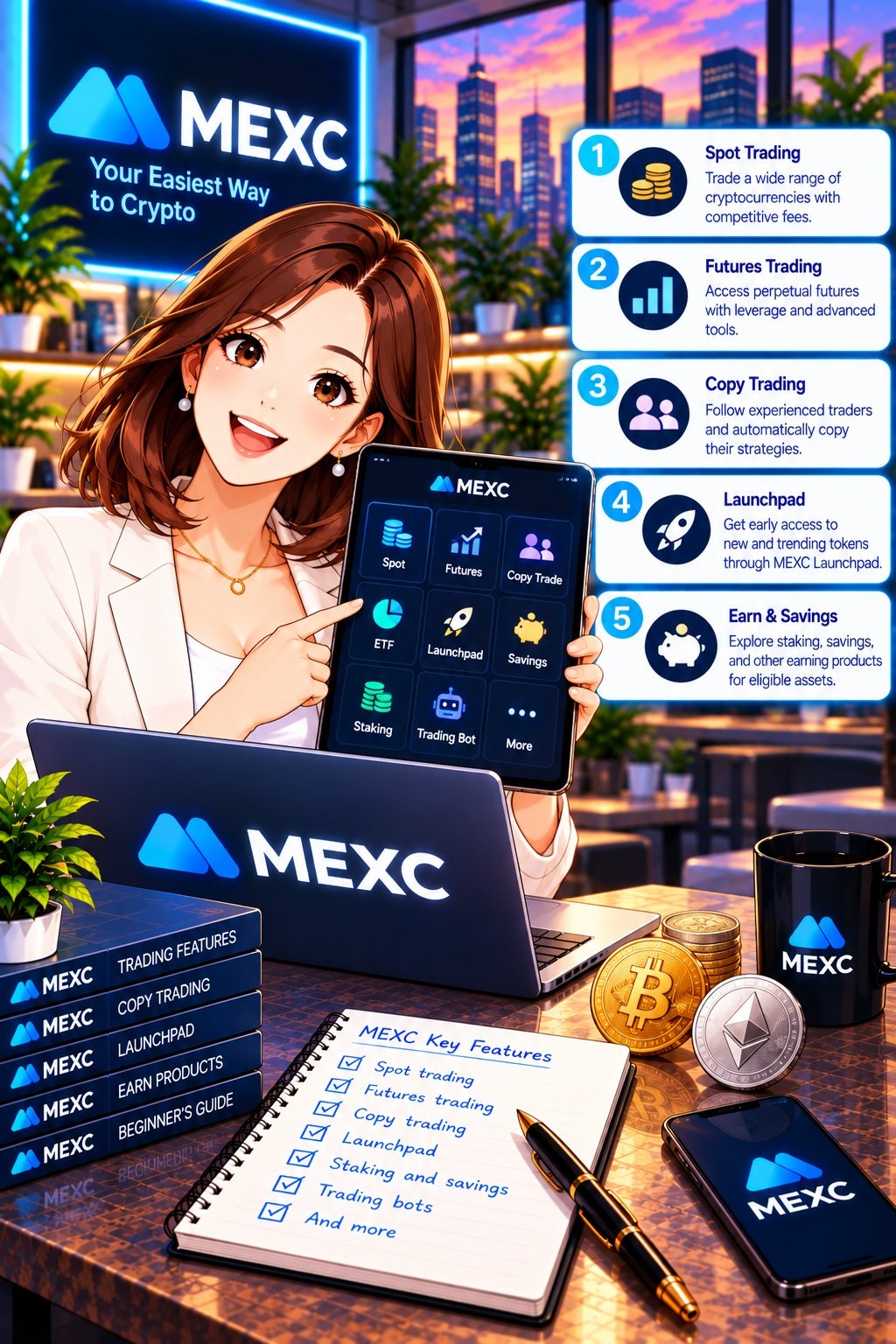
Security is an important factor when evaluating MEXC because centralized exchanges may hold customer assets and provide access to volatile cryptocurrency markets.
MEXC has described account security features and custody-related controls. However, the availability of these measures does not guarantee protection against every cybersecurity incident, operational failure, or financial loss.
Multi-Factor Authentication
Multi-factor authentication introduces an additional verification requirement beyond a password.
Depending on current account features, users may be able to configure supported authentication applications or other verification methods.
Authentication credentials and recovery information should be protected against unauthorized disclosure.
Password and Device Security
Strong, unique passwords can reduce exposure to credential reuse attacks.
Users should also protect their devices against malware, suspicious browser extensions, and unauthorized applications.
Keeping operating systems and security software updated can help address known vulnerabilities.
Phishing and Impersonation
Fraudulent websites and messages may imitate MEXC branding to obtain passwords, authentication codes, or other sensitive information.
Scammers may also promote fake token listings, fraudulent investment opportunities, or unofficial account support services.
Users should independently verify official websites and communication channels before entering credentials or authorizing transactions.
For additional information, read our guide to avoiding cryptocurrency scams.
Account Activity Monitoring
Reviewing account activity can help identify unfamiliar devices, unexpected transactions, or unauthorized security changes.
Where supported, users should examine active sessions, security notifications, and device management options.
Suspicious activity should be investigated through verified official support channels.
Withdrawal Security
Withdrawal protections may include additional authentication, address verification, or other account controls.
These measures can reduce certain unauthorized-transfer risks but do not guarantee that incorrect blockchain transactions can be reversed.
Users should carefully verify destination addresses and supported networks before approving withdrawals.
Custody and Operational Risk
Assets maintained through a centralized exchange account generally depend on the provider’s custody and operational arrangements.
Users may face risks involving technical interruptions, account restrictions, cybersecurity incidents, or the provider’s financial condition.
Technical security measures should not be confused with guarantees of financial solvency or unrestricted access to customer assets.
Proof of Reserves
MEXC has published reserve-related disclosures concerning certain customer digital assets.
Such information may provide insight into reported holdings within the scope of a particular verification methodology.
However, proof of reserves is not necessarily equivalent to a complete independent financial statement audit.
A reserve report may not fully establish all liabilities, ownership arrangements, financial solvency, or exposure to undisclosed obligations.
Readers should examine the date, methodology, scope, and limitations of any published report.
Security Responsibilities for Users
Users should understand that exchange-level security measures cannot eliminate every source of risk.
Important precautions include:
- Using unique account credentials.
- Enabling supported multi-factor authentication.
- Reviewing account activity and security alerts.
- Verifying official websites and communications.
- Protecting withdrawal information.
- Understanding custody arrangements.
- Avoiding suspicious applications and unauthorized access methods.
Our educational guide on securing a cryptocurrency exchange account provides additional practical information.
MEXC Regulation and Geographic Restrictions
MEXC services are subject to legal requirements, geographic restrictions, and applicable operating arrangements.
Readers should not assume that a cryptocurrency exchange is available in every country simply because its website can be accessed internationally.
Restricted Jurisdictions
MEXC identifies certain countries and regions where its services are restricted or unavailable.
Restrictions may apply to the entire platform or to particular products.
The complete list and applicable conditions can change, so users should review the current official service agreement before considering any account or transaction.
Derivatives-Specific Restrictions
Futures and other leveraged products may face stricter regulatory requirements than ordinary spot cryptocurrency transactions.
Eligibility for spot trading does not automatically establish eligibility for derivatives or margin-based products.
Users should verify the legal availability of each intended service separately.
Identity Verification Requirements
MEXC may require identity verification and additional documentation to comply with applicable financial regulations.
Requirements can vary according to jurisdiction, account type, and intended service.
Completing identity verification does not guarantee continued access to every platform feature.
Operating Entities and Regulatory Status
Cryptocurrency services may be provided through different legal entities or regional arrangements.
An authorization or registration granted to one entity should not automatically be interpreted as permission to provide every product worldwide.
Readers should verify the entity responsible for the intended service and examine applicable regulatory disclosures.
Changes in Service Availability
Regulatory developments and changes to exchange policies may affect account eligibility, supported assets, trading products, and withdrawal conditions.
Users should monitor current official announcements rather than relying on historical availability information.
Compliance principle: Geographic restrictions and identity verification requirements should not be bypassed through false residency information, inaccurate documentation, or unauthorized technical methods.
Advantages and Limitations of MEXC
MEXC’s broad market selection and trading features may be relevant to readers researching cryptocurrency exchanges, particularly those interested in understanding smaller altcoin markets.
Potential Advantages
- Broad asset selection: MEXC has offered numerous cryptocurrency trading pairs, including smaller altcoins and newly listed tokens.
- Spot trading: Eligible users may access supported spot markets without necessarily using leverage.
- Derivatives products: Certain users may access futures contracts and related trading tools.
- Promotional fee arrangements: Selected markets may qualify for reduced or zero-fee conditions.
- Market information: Trading interfaces may provide charts, order books, and transaction data.
- Additional services: Eligible users may access other digital asset products depending on current availability.
Important Limitations
- Small-cap volatility: Newly listed or thinly traded cryptocurrencies may experience extreme price movements.
- Liquidity limitations: Some markets may have wide spreads and substantial slippage.
- Token quality uncertainty: Exchange listings do not guarantee project legitimacy or financial soundness.
- Delisting risks: Trading suspensions or asset removals may affect liquidity and access.
- Leverage exposure: Derivatives can produce rapid liquidation and substantial losses.
- Custody dependence: Exchange-held assets remain exposed to operational and counterparty risks.
- Geographic restrictions: Services may be unavailable in certain jurisdictions.
- Variable costs: Spreads, slippage, funding payments, and withdrawal charges can affect transaction outcomes.
These advantages and limitations should be evaluated together. A broad selection of cryptocurrencies and competitive advertised fees do not automatically make an exchange suitable for every user, particularly when trading assets with limited liquidity or uncertain project fundamentals.
Common MEXC Beginner Mistakes to Avoid
MEXC provides access to a wide range of cryptocurrency markets, but the availability of numerous trading pairs can make it difficult for inexperienced users to distinguish established digital assets from highly speculative projects.
Understanding common mistakes is especially important when evaluating smaller altcoins, newly listed tokens, and leveraged trading products.
Assuming Every Listed Cryptocurrency Is Reliable
An exchange listing does not establish that a cryptocurrency project is legitimate, financially sustainable, technically secure, or suitable for investment.
Users should independently examine project documentation, token distribution, governance arrangements, and available market information.
Confusing a New Listing With a New Project
A cryptocurrency may have existed and traded on other platforms before becoming available on MEXC.
Therefore, a recent exchange listing does not necessarily indicate that the underlying blockchain project has recently launched.
Ignoring Market Liquidity
Some smaller cryptocurrencies have limited order-book depth and relatively wide bid-ask spreads.
In these conditions, a transaction may execute at a substantially different price from the initially displayed quote.
Users should distinguish market visibility from the ability to complete transactions at expected prices.
Relying Only on Advertised Low Fees
Reduced or zero-fee promotions do not eliminate every transaction cost.
Spreads, slippage, funding payments, withdrawal charges, and other product-specific expenses may affect the final outcome.
Users should compare the complete transaction cost rather than a single advertised fee percentage.
Following Social Media Hype
Newly listed tokens and meme coins may attract attention through online communities, social media promotions, and speculative trading activity.
Claims of guaranteed returns, imminent price increases, or exclusive investment opportunities should be treated as warning signs.
For additional guidance, read our article on avoiding cryptocurrency scams.
Overlooking Token Unlocks
Some cryptocurrency projects release previously restricted tokens according to vesting or unlock schedules.
Changes in circulating supply may affect market conditions, particularly when ownership is concentrated among a relatively small number of holders.
Users should examine official tokenomics information and avoid assuming that current supply conditions will remain unchanged.
Using Leverage Without Understanding Liquidation
Leveraged derivatives can magnify losses relative to the collateral committed.
Rapid market movements may cause positions to reach liquidation conditions before users can respond.
Low trading fees or advanced order controls do not eliminate liquidation risk.
Ignoring Withdrawal and Delisting Conditions
Trading suspensions, network maintenance, asset delistings, and account restrictions may affect the ability to trade or transfer certain cryptocurrencies.
Users should review official announcements and understand applicable withdrawal conditions before relying on a particular market.
How to Evaluate MEXC Before Using Its Services
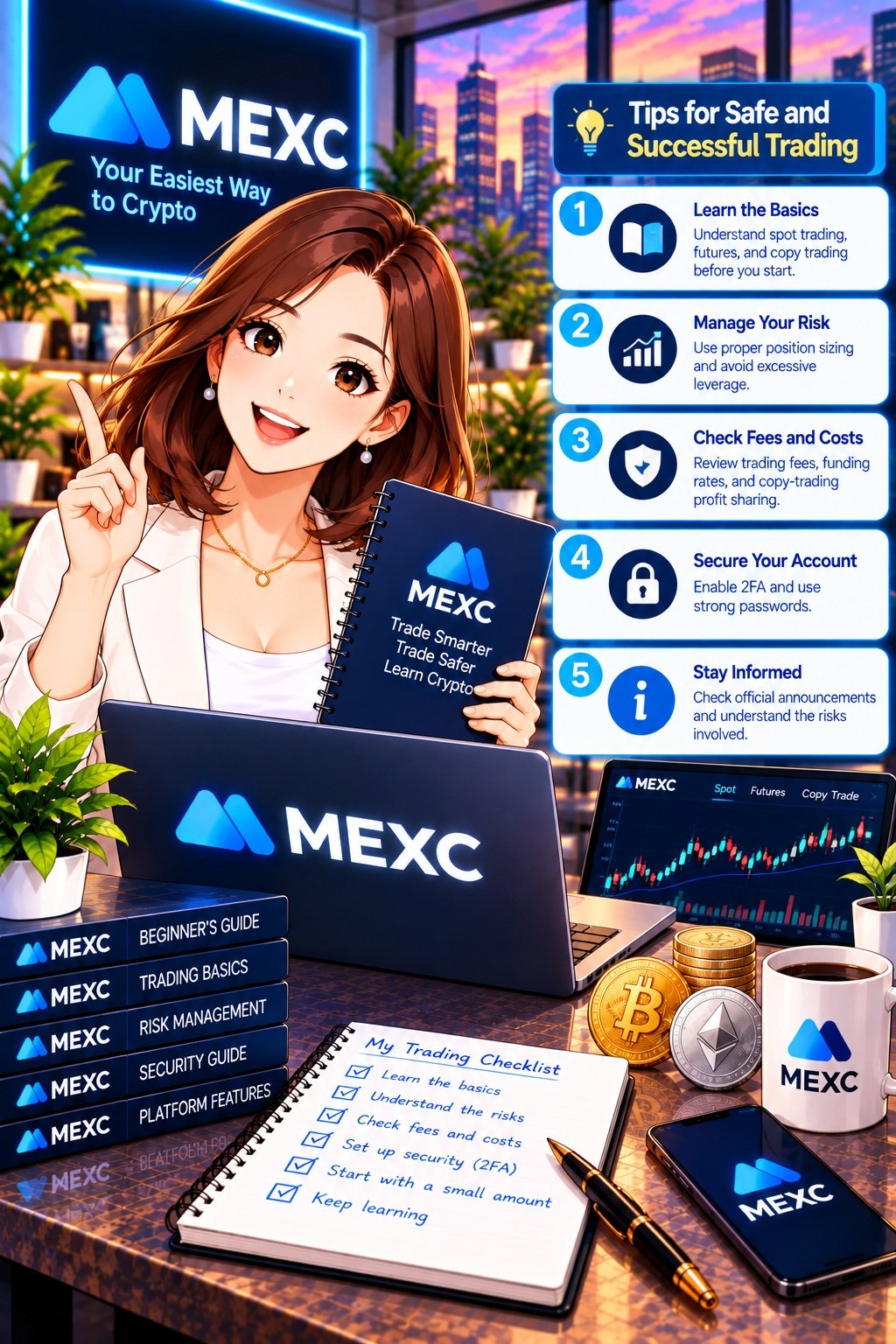
A structured evaluation can help readers assess MEXC according to their circumstances rather than relying on promotional claims or the number of available cryptocurrencies.
Step 1: Confirm Legal Eligibility
Review MEXC’s current official terms and geographic restrictions.
Verify whether the relevant operating entity is permitted to provide the intended service in your country of residence.
Eligibility for one product does not automatically establish eligibility for every trading service.
Step 2: Identify Your Intended Activity
Determine whether you are researching spot markets, newly listed cryptocurrencies, derivatives, or other digital asset services.
Different activities involve different execution mechanisms, account requirements, and financial risks.
Step 3: Verify the Digital Asset
Confirm the project’s official name, ticker symbol, blockchain network, and contract address where applicable.
Similar names and symbols can create confusion, particularly among smaller tokens.
Step 4: Examine Liquidity and Execution Conditions
Review order-book depth, trading activity, spreads, and potential slippage for the relevant market.
Do not assume that displayed trading volume guarantees reliable liquidity or favorable execution.
Step 5: Compare Total Transaction Costs
Evaluate maker and taker fees, promotional conditions, spreads, withdrawal charges, and other applicable expenses.
For derivatives, consider funding payments, collateral requirements, and potential liquidation-related costs.
Step 6: Review Account Security
Examine supported authentication methods, withdrawal protections, account recovery procedures, and relevant custody disclosures.
Understand the consequences of unauthorized access, operational interruptions, and dependence on a centralized provider.
Step 7: Check Transfer Requirements
Verify the supported asset, blockchain network, destination address, transaction limits, and applicable withdrawal fees.
Incorrect blockchain transfers may be irreversible.
Step 8: Compare Other Cryptocurrency Exchanges
Evaluate MEXC alongside other platforms using consistent criteria, including regulatory eligibility, total costs, market liquidity, custody arrangements, and product complexity.
Our best crypto exchanges compared guide provides a broader educational comparison of Binance, Coinbase, Bybit, Bitget, MEXC, and Gate.io.
Step 9: Make an Independent Assessment
Consider your understanding of the intended asset, financial circumstances, experience, and ability to withstand potential losses.
No exchange listing, trading fee promotion, or market trend can guarantee a profitable result.
Frequently Asked Questions
What is MEXC?
MEXC is a centralized cryptocurrency exchange established in 2018. Its services have included spot trading, derivatives, and other digital asset products for eligible users.
What is MEXC known for?
MEXC is frequently associated with a broad selection of cryptocurrency trading pairs, including smaller altcoins and newly listed digital assets.
Does MEXC offer spot trading?
MEXC has offered spot markets for supported cryptocurrencies. Available trading pairs and account eligibility depend on current platform arrangements and geographic restrictions.
Does MEXC offer futures trading?
MEXC has offered futures and perpetual derivatives products for eligible users. These products may involve leverage, funding payments, margin requirements, and liquidation risks.
Does MEXC offer zero trading fees?
MEXC has offered selected reduced-fee and zero-fee trading arrangements. These conditions may depend on the trading pair, account eligibility, and promotional period.
Even when an explicit trading fee is zero, spreads, slippage, and other transaction costs may still apply.
Are newly listed cryptocurrencies safe?
Not necessarily. Newly listed assets may involve limited liquidity, uncertain valuations, concentrated ownership, technical vulnerabilities, and substantial price volatility.
Can a newly listed cryptocurrency lose most of its value?
Yes. Cryptocurrency prices can decline sharply, and smaller or newly listed tokens may experience particularly severe losses because of speculative demand and limited liquidity.
What is slippage on MEXC?
Slippage occurs when a transaction executes at a different price from the price initially expected. It can become significant during volatile conditions or in markets with limited order-book depth.
Does MEXC support meme coins?
MEXC has offered markets involving various meme-related cryptocurrencies. Specific listings may change, and exchange availability does not establish investment quality.
What happens if MEXC delists a cryptocurrency?
Trading or other services for the affected asset may be restricted or discontinued according to the applicable platform announcement.
Users should review official notices concerning trading deadlines, supported withdrawals, and other relevant conditions.
Is MEXC suitable for beginners?
Suitability depends on the user’s knowledge, legal eligibility, intended activity, and understanding of risk.
A broad selection of speculative tokens and advanced derivatives can introduce complexities that inexperienced users may find difficult to evaluate.
Is MEXC completely safe?
No cryptocurrency exchange can guarantee complete safety. Users may face cybersecurity incidents, custody risks, operational failures, regulatory restrictions, and market losses.
Does MEXC publish proof of reserves?
MEXC has published reserve-related disclosures concerning certain customer assets. Readers should examine the current scope and methodology rather than treating reserve information as a guarantee of solvency.
Is MEXC available worldwide?
No. MEXC services are subject to geographic restrictions, account eligibility requirements, and product-specific limitations.
Users should verify current official terms for their country of residence.
Can I withdraw cryptocurrency from MEXC?
Eligible accounts may support withdrawals of selected digital assets through supported blockchain networks, subject to identity verification, account restrictions, withdrawal limits, security procedures, and applicable fees.
Before requesting a withdrawal, users should verify the destination address, selected network, transaction amount, and current processing conditions. Incorrect blockchain transfers may be irreversible.
Is MEXC better than Binance or Coinbase?
No exchange is universally superior. MEXC, Binance, and Coinbase differ in available markets, fee arrangements, custody structures, regulatory requirements, and product offerings.
A meaningful comparison depends on the user’s legal eligibility, intended activity, experience, and ability to understand the associated risks.
Key Takeaway
This MEXC exchange guide explains the platform’s trading services, market selection, transaction costs, security considerations, and major financial risks.
MEXC’s broad selection of cryptocurrencies may be relevant to readers researching smaller altcoins and newly listed digital assets. However, exchange availability should not be confused with evidence of project legitimacy, technical security, or investment quality.
Advertised low trading fees should be evaluated alongside spreads, slippage, liquidity, and other transaction costs.
Readers should independently assess the underlying digital asset, verify legal eligibility, understand custody arrangements, and examine current official service conditions.
Newly listed tokens, meme coins, and leveraged derivatives can involve substantial financial risks, including the possibility of losing the entire amount committed.
No cryptocurrency exchange, token listing, or trading strategy can guarantee profitable results.
Official Sources and Further Information
MEXC’s products, trading fees, supported assets, and geographic restrictions may change. Readers should consult current official documentation before relying on any particular service.
- MEXC Official Website — General platform information and available services.
- MEXC Support Center — Account requirements, security information, trading services, and official announcements.
- MEXC Fee Information — Published trading fee information and applicable conditions.
These links are provided for educational reference only. They are not referral or affiliate tracking links, and their inclusion does not constitute an endorsement.
Educational Disclaimer
This article is provided for general educational and informational purposes only. It does not constitute investment, financial, legal, tax, or personalized trading advice.
CryptoWikiHub is an independent educational website. This article is not an official MEXC publication and does not imply sponsorship, authorization, or endorsement by MEXC.
Cryptocurrency trading involves substantial financial risk, including the possibility of losing the entire amount committed. Small-cap altcoins, newly listed tokens, and meme coins may experience extreme price volatility, limited liquidity, and substantial or total losses.
Derivatives, margin trading, and leveraged positions introduce additional risks, including rapid liquidation and potentially greater losses depending on the applicable product terms.
Exchange listings, promotional fee arrangements, trading volume figures, and historical price performance do not guarantee the legitimacy, safety, or profitability of any cryptocurrency.
MEXC services, trading fees, supported assets, regulatory permissions, and geographic restrictions may change without notice. Readers should independently verify current information and their legal eligibility before using any cryptocurrency service.
Security controls, custody arrangements, and proof-of-reserves disclosures do not guarantee protection against all losses, cybersecurity incidents, operational failures, or counterparty risks.
AI-generated images in this article are educational illustrations. They are not verified screenshots of actual MEXC interfaces, live cryptocurrency prices, real account balances, or official product demonstrations. Any illustrated prices, charts, or performance figures are fictional and should not be interpreted as actual trading results.
MEXC names, logos, and related trademarks belong to their respective owners. Their appearance in educational illustrations does not imply an official partnership or endorsement.
This article contains no referral codes, affiliate tracking links, or guaranteed-return promotions at the time of publication.